
Introduction
valplekar is best approached through language and context, not through the exaggerated explanations that have appeared across the internet. The strongest interpretation available connects the word with Swedish vocabulary associated with puppies and play. That makes puppy play the sensible subject to explore, while claims presenting valplekar as a formal training system, a special philosophy, or a confirmed geographical destination should be treated carefully.
The distinction matters because unfamiliar words can quickly collect invented explanations online. Once one description is copied by another website, repetition can make an unsupported claim appear established. With valplekar, separating what can reasonably be supported from what remains uncertain produces a much clearer picture.
The Swedish Language Behind valplekar
The most useful starting point is Swedish vocabulary. The word can be understood through two familiar components: “valp,” associated with a puppy, and “lek,” associated with play. Swedish language resources from Svenska Akademien provide the relevant vocabulary framework and document Swedish word formation and usage.
The ending in valplekar can therefore be understood in relation to the plural form associated with play or games. In plain English, the resulting idea is puppy play or puppy games.
That linguistic reading is much more convincing than explanations that attach an elaborate hidden meaning to the word.
It is also important not to turn a straightforward linguistic construction into a branded concept. There is no solid evidence that valplekar itself represents a registered puppy-training programme, commercial system, therapeutic technique, or official canine-development framework.
The distinction between a descriptive expression and a named method is easy to overlook, especially when a foreign word appears in an English-language headline.
What Puppy Play Actually Involves
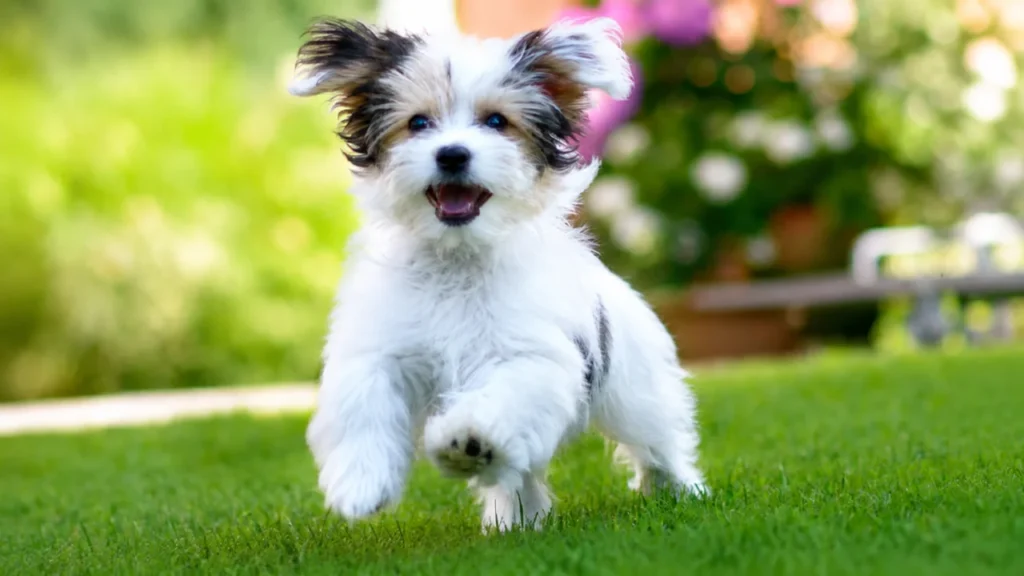
Puppy play covers ordinary activities through which young dogs interact with their surroundings, people, objects, and other suitable dogs.
A puppy may chase a toy across a room, investigate a new object, carry something around, engage in a gentle game with its owner, or interact with another dog. These activities can look simple, but they give a young dog opportunities to explore movement, communication, boundaries, and its environment.
Play should not be confused with constant physical exertion.
Young dogs need periods of activity as well as periods of rest. A puppy that has been playing for a while may need quiet time rather than another demanding game. Good puppy care is not about keeping a dog busy every minute of the day.
This is where the practical idea behind valplekar becomes useful. Puppy play can be enjoyable while also giving a young dog opportunities to experience new situations in an appropriate way.
Why Play Matters During Early Development
Play is an important part of normal canine behaviour. Young dogs use interaction and exploration to discover how their environment works.
During play, puppies encounter different movements, objects, sounds, textures, and social responses. A toy behaves differently from another puppy. A person responds differently from a dog. A new room provides different smells and surfaces from a familiar sleeping area.
Those experiences can help puppies become more comfortable with their surroundings when introduced appropriately.
Play can also provide opportunities for social learning. Puppies interacting with compatible dogs may encounter signals that communicate whether another dog wants to continue playing, slow down, or move away. These interactions need to be suitable and supervised rather than left entirely to chance.
The value is therefore not simply in making a puppy tired.
A well-managed play experience gives the puppy something to do, something to investigate, and something to learn from.
valplekar Does Not Need to Mean Formal Training
One of the easiest mistakes to make when researching valplekar is assuming that every reference must describe a specialised training technique.
There is not enough reliable evidence to make that claim.
Play and training can overlap, but they serve different purposes. Training normally has a specific behavioural objective. An owner may be teaching a puppy to respond to a cue, settle calmly, walk appropriately, or follow a household routine.
Play can support those activities without becoming formal training itself.
For example, an owner may use a short toy game to encourage a puppy to interact with them. A search game may encourage the puppy to investigate its surroundings. A game involving returning to the owner can create opportunities for positive interaction.
But the puppy does not need to perform a task every time it plays.
Sometimes play should simply be play.
That distinction keeps valplekar grounded in normal canine behaviour rather than turning it into a complicated formula.
Safe Play Starts With the Environment
Puppies are naturally curious, and that curiosity can create problems in an ordinary home.
Before allowing a young dog to play freely, owners should consider what the puppy can reach. Small objects, unsafe household materials, electrical cables, sharp items, and anything that could be swallowed should be kept away from the play area.
Toys also deserve attention.
A toy that is suitable for one puppy may not be appropriate for another. Chewing strength, size, age, and individual behaviour all matter. Damaged toys should be removed rather than left available simply because the puppy likes them.
Supervision is particularly important when a puppy is exploring something unfamiliar.
The goal is not to eliminate curiosity. It is to give curiosity a safer environment in which to happen.
That principle fits naturally with the practical side of valplekar: puppy play works best when the surroundings allow exploration without unnecessary hazards.
Choosing the Right Kind of Puppy Play
There is no single game that every puppy needs to play.
Some puppies enjoy chasing toys. Others show greater interest in searching, carrying objects, exploring, or interacting with people. Individual temperament makes a difference.
A short toy game can be useful for an energetic puppy, while a simple sniffing or searching activity may provide a different type of stimulation. Gentle exploration can also be valuable when a puppy is becoming familiar with a new environment.
Owners should pay attention to how the puppy behaves during these activities.
If the puppy becomes excessively frustrated, overwhelmed, or unable to settle afterward, the activity may need to be shortened or changed. More activity is not automatically better.
The strongest approach is responsive rather than rigid.
That is a useful way to apply the idea of valplekar without pretending that there is a fixed programme that every puppy must follow.
Social Play Requires Good Judgment
Interaction with other dogs can be an important part of a puppy’s experience, but simply putting puppies together does not guarantee a positive result.
Size, age, temperament, play style, environment, and the behaviour of the other dog all matter.
A confident puppy may behave very differently around a calm, familiar dog than around a large group of unfamiliar animals. A timid puppy may need a quieter introduction rather than an overwhelming social situation.
Owners should therefore watch the interaction instead of assuming that puppies will always regulate themselves perfectly.
Good play should leave room for breaks.
If one dog repeatedly tries to escape the interaction, becomes uncomfortable, or stops participating, continuing the game is not a good idea. The same applies when play becomes excessively rough or difficult to interrupt.
The practical lesson is simple: quality of interaction matters more than the number of playmates.
The Difference Between Play and Exercise
Play and exercise are related, but they are not interchangeable.
Exercise focuses primarily on physical activity. Play can include physical movement, but it also involves curiosity, exploration, communication, and interaction.
A puppy running after a toy is moving its body, but it is also responding to an object and communicating with the person controlling the game. A puppy investigating a new area may not be running at all, yet the experience can still provide valuable stimulation.
This broader view makes the puppy-play interpretation of valplekar more useful.
It avoids the assumption that the only successful play session is one that leaves a puppy exhausted.
A young dog needs an appropriate balance of activity and recovery. Pushing activity too far can be counterproductive, especially when the puppy is still developing.
Why Online Information About valplekar Is Confusing
Search results for unusual words can be surprisingly unreliable.
When a word has limited established English-language coverage, websites may publish articles based on other online articles rather than primary linguistic or historical sources. One page introduces an interpretation, another repeats it, and later pages add details that were never independently established.
That pattern appears particularly relevant to valplekar.
Recent online pages have described it in connection with puppy play, while other pages have added claims involving surnames, destinations, cultural traditions, or specialised systems. Those interpretations do not all have the same evidentiary foundation.
A responsible writer should therefore rank the claims rather than present every version as equally credible.
The Swedish puppy-play interpretation has a straightforward linguistic basis because it can be connected to Swedish vocabulary concerning puppies and play. By contrast, claims about a particular location, formal method, or elaborate cultural tradition require separate evidence.
Without that evidence, they should not be presented as established facts.
The Surname Question Needs Separate Treatment
Another recurring online claim associates Valplekar with a South Asian surname, particularly in discussions involving western India.
That possibility should not automatically be combined with the Swedish puppy-play interpretation.
A surname can have an entirely different linguistic and historical origin from an unrelated word that happens to have the same spelling. Establishing surname history normally requires genealogical records, historical documents, regional naming evidence, or other reliable sources.
The existence of a similar-looking surname does not prove a connection between the surname and the Swedish expression.
For that reason, a careful discussion of valplekar should keep the two subjects separate unless stronger evidence demonstrates a relationship.
This is especially important for content publishers because an attractive origin story is not necessarily an accurate one.
Is valplekar a Place?
There is insufficient reliable evidence to confidently present Valplekar as a recognised town, village, tourist destination, or established geographical location.
Some online articles have described it in travel-related language, but descriptions appearing on websites are not enough to establish that a location exists.
A genuine geographical claim should be supported by dependable mapping, government, geographic, municipal, or other authoritative records.
Until that evidence is available, treating valplekar as a confirmed destination would be an unnecessary factual risk.
The safer interpretation remains the linguistic one connected with puppy play.
How to Use valplekar Naturally in Pet Content
If valplekar is being used in a dog-focused article, the writing should sound natural rather than repeatedly forcing the word into every sentence.
For example, a sentence discussing puppy play can mention valplekar when describing the Swedish context. The rest of the paragraph can simply discuss puppies, games, exploration, social interaction, and safe activities.
There is no benefit in writing unnatural sentences merely to increase keyword frequency.
A strong article should also avoid claiming that every puppy activity is officially called valplekar. That would create a level of certainty that the available evidence does not support.
The better approach is to explain the linguistic connection once, then use the word naturally where it fits the discussion.
What Readers Should Take Away From the Swedish Connection
The most defensible understanding of valplekar is also the least complicated.
The word can be connected with Swedish vocabulary involving puppies and play. From there, the subject naturally leads into puppy games, exploration, interaction, and early experiences.
What should be avoided is the temptation to manufacture a larger story around it.
There is no need to describe valplekar as a secret Scandinavian philosophy, a guaranteed puppy-development system, or a mysterious destination. Those claims make the subject sound more interesting, but they also weaken the credibility of the article.
Good content does the opposite.
It identifies what can be supported, separates uncertain claims, and gives readers enough context to understand why the word appears in discussions about puppies.
A Sensible View of valplekar for Dog Owners
For someone interested in puppies, the practical message is straightforward.
Give a young dog safe opportunities to play, explore, interact, and rest. Choose activities that suit the puppy’s age and individual behaviour. Supervise unfamiliar situations. Keep dangerous objects out of reach. Allow social experiences to develop at an appropriate pace.
There is no requirement to turn every game into a training exercise.
A puppy chasing a suitable toy, investigating a safe room, playing appropriately with another dog, or interacting with its owner is already engaging in the kind of behaviour that gives the Swedish puppy-play interpretation of valplekar its practical relevance.
The value is in the experience itself.
Final Takeaway
valplekar does not need an elaborate backstory to be interesting. Its clearest connection is with Swedish language and puppy play, while several broader claims circulating online remain insufficiently supported.
That distinction should guide anyone writing about the subject.
If the evidence is linguistic, keep the discussion linguistic. If the subject is puppy development, rely on established animal-care principles. If someone claims that Valplekar is a specific place, surname origin, commercial system, or formal training method, ask for independent evidence before treating the claim as fact.
For readers and publishers alike, that is the real lesson: an unusual word deserves curiosity, but curiosity should never become an excuse for inventing certainty.
FAQs
1. Can valplekar be used to describe ordinary games with a puppy?
Yes, when using the Swedish puppy-play interpretation, the idea naturally covers ordinary playful activities involving puppies. It should not be presented as the official name of one particular game.
2. Does every Swedish dog owner use the word valplekar?
That claim cannot be confirmed from the reliable evidence available. It is safer to describe valplekar as a Swedish-language expression associated with puppy play rather than claiming that it is universally used by Swedish dog owners.
3. Can puppy play help with learning?
Play can provide opportunities for puppies to explore, interact, and experience different situations. However, it should not be presented as a replacement for appropriate training, socialisation, veterinary care, or responsible puppy management.
4. Is the surname Valplekar connected to the Swedish puppy-play interpretation?
There is not enough reliable evidence to establish that connection. A surname with the same spelling should be treated as a separate subject unless historical or linguistic evidence demonstrates otherwise.
5. Should Valplekar be described as a Swedish dog-training method?
No. There is insufficient authoritative evidence to support presenting valplekar as a formally recognised dog-training method. Describing it in connection with puppy play is considerably more defensible.