
Introduction
Koriandri is best understood through what actually happens in the kitchen: the same plant can bring freshness to a finished curry, warmth to a spice blend, and a completely different character to a chutney or marinade. The confusion around the name is real, but the food itself is straightforward. The plant is Coriandrum sativum, and its leaves, seeds, stems, and, in some cuisines, roots all have useful culinary roles.
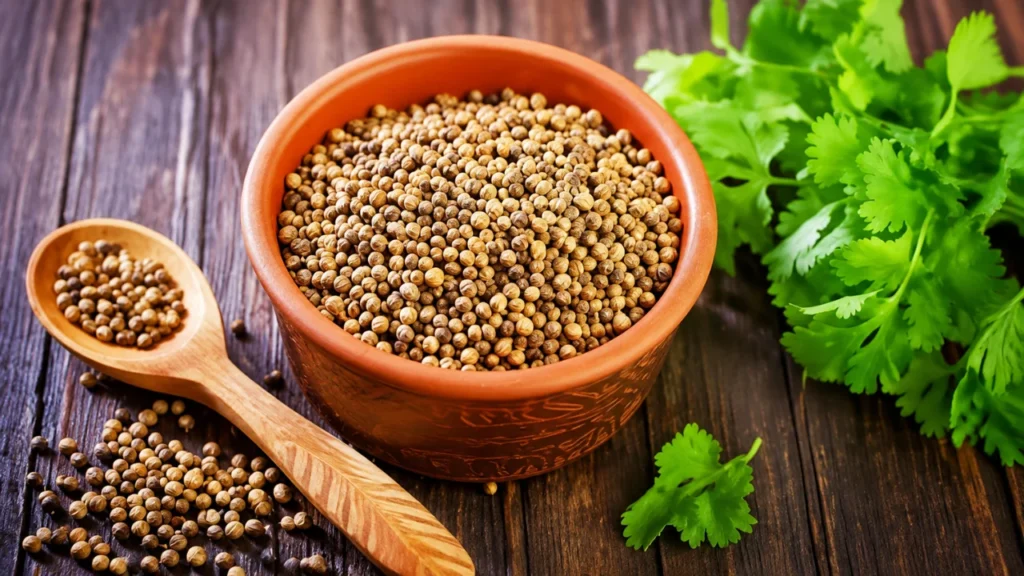
The most important distinction is between the fresh leaves and the dried fruits commonly called coriander seeds. They come from the same plant, but they should not be treated as interchangeable ingredients. Fresh leaves bring a bright, green character, while the seeds deliver a warmer, more rounded spice flavor. Understanding that difference makes koriandri much easier to use well.
Where Koriandri Fits in the Coriander Family of Names
The name deserves a little care because online explanations do not always agree.
In Estonian, the main word for coriander is koriander, and koriandri appears as a grammatical form of that word. English-language websites have also begun using “koriandri” as a standalone label when discussing coriander. That does not establish a separate botanical species. The plant itself remains Coriandrum sativum.
This distinction matters because plant names often change across languages and regions. A reader encountering koriandri in a food article should look at the context before assuming it describes an unusual or newly discovered herb.
The botanical identity is much less complicated. Coriandrum sativum belongs to the Apiaceae family, the same broad plant family that includes familiar crops such as carrot, parsley, celery, and fennel.
In North American English, fresh coriander leaves are commonly called cilantro. In other places, coriander can refer to the plant as a whole or specifically to its seeds. South Asian cooking also uses the name dhania in different contexts.
So the name changes. The plant does not.
Why Fresh Leaves and Coriander Seeds Taste So Different
This is the point that matters most when cooking with koriandri.
Fresh leaves have a lively aroma that can come across as citrusy, green, grassy, or sharply herbal. They work particularly well with foods that need freshness at the end of cooking. A rich curry, for example, can feel heavy without a fresh finishing note, while chopped coriander leaves can provide a cleaner contrast.
Coriander seeds take the flavor in another direction. They are warmer, more aromatic, and better suited to spice blends, marinades, roasted foods, and dishes where the seasoning needs to develop through cooking.
The difference becomes even clearer after toasting. Gently heating whole seeds in a dry pan releases aromatic compounds and gives them a deeper character. They can then be crushed or ground for use in a spice mixture.
That is why replacing fresh leaves with ground coriander seed rarely produces the intended result. The ingredients share a plant but not the same culinary role.
The Fresh Leaves Are More Than a Garnish
A common habit is to scatter chopped coriander over a finished dish and call the job done. That undersells what koriandri can do.
Fresh leaves can be incorporated into chutneys, sauces, salads, soups, rice dishes, marinades, and spicy condiments. Their strongest quality is their ability to add contrast.
Think about a rich curry containing oil, onions, garlic, spices, and a thick sauce. A small amount of fresh coriander near the end can introduce a bright herbal note that cuts through those heavier flavors.
The same principle works with grilled foods. A fresh coriander and citrus-based sauce can add acidity and herbal freshness to something smoky or richly seasoned.
The leaves also work well with ingredients such as tomato, chili, lime, lemon, beans, lentils, rice, and yogurt. Their flavor is strong enough to be noticeable but flexible enough to fit several culinary traditions.
Koriandri is particularly useful when a dish tastes flat rather than when it simply needs more seasoning. Salt changes seasoning balance; fresh herbs can change the character of the entire dish.
What About the Stems, Seeds, and Roots?
Throwing away every part except the leaves is unnecessary.
Tender stems can carry plenty of coriander flavor. They can be finely chopped and added to chutneys, sauces, marinades, and cooked dishes. Their texture is less delicate than the leaves, which makes them particularly useful when the ingredient is being blended or cooked.
The seeds have a more substantial role in the spice cupboard. Whole coriander seeds can be toasted, crushed, or ground. They are used in spice blends and in dishes where a warm, aromatic flavor is wanted.
Roots are used in certain regional cuisines as well, especially in Southeast Asian preparations. They are more concentrated and earthy than the leaves and can be incorporated into pastes and marinades.
This is one of the plant’s most practical features. A single crop can provide several ingredients with noticeably different culinary personalities.
Why Some People Think Koriandri Tastes Like Soap
The disagreement over fresh coriander is not imaginary.
Some people describe the leaves as fresh and citrusy, while others experience an unpleasant soapy character. Research into food preferences has found associations between cilantro perception and genetic variation in smell-related receptors, including research involving the OR6A2 region. Scientists have also identified other genetic factors associated with differences in chemosensory perception.
The chemistry of coriander is part of the story. Research has identified aldehydes and other volatile compounds that contribute to its characteristic aroma. Different people can perceive those compounds differently.
That explains why two people can eat the same salsa and have completely different reactions.
It also means there is little point in telling someone who dislikes fresh coriander that they simply need to “get used to it.” Taste perception is personal. If fresh leaves are unpleasant, coriander seeds offer a very different route into the same plant.
Koriandri in South Asian Cooking
Coriander has a particularly important place in South Asian kitchens.
Fresh leaves are commonly used in chutneys, curries, dals, rice dishes, salads, and garnishes. Ground coriander seed is a familiar component of spice mixtures and can provide body without adding the direct heat associated with chili.
One useful cooking technique is to toast whole coriander seeds briefly before grinding them. The process intensifies their aroma and gives homemade spice blends a fresher character than old pre-ground powder.
Fresh leaves should usually be added toward the end of cooking when their bright flavor is wanted. Long cooking can soften and change that freshness.
The best results often come from using both forms in the same meal. Coriander seed can build a warm base, while fresh leaves provide a final burst of freshness.
How Koriandri Works in Other Cuisines
Coriander is not confined to South Asian cooking.
Fresh cilantro is widely used in Mexican and Latin American dishes, where it pairs naturally with ingredients such as lime, tomato, chili, beans, and grilled foods. It is also common in Southeast Asian cooking, where leaves and roots can appear in sauces, soups, pastes, and marinades.
Middle Eastern and Mediterranean cooking uses coriander seeds in spice blends, meat preparations, vegetables, and other savory dishes.
The interesting part is not that every cuisine uses koriandri in the same way. They do not. The ingredient adapts because its flavor can be pushed in different directions depending on whether the cook uses fresh leaves, seeds, roots, or stems.
That versatility is a stronger reason for its global popularity than any fashionable food trend.
What Nutrition Can You Reasonably Expect?
Koriandri can contribute nutrients to the diet, but it should not be sold as a miracle ingredient.
Fresh coriander leaves are nutrient-containing vegetables and herbs, and food-composition databases such as the USDA’s FoodData Central provide detailed nutritional data for foods and ingredients.
The practical limitation is portion size. People normally use fresh coriander in relatively small quantities. That means its nutritional contribution should be considered alongside the rest of the meal rather than isolated and exaggerated.
Coriander also contains plant compounds that researchers study for antioxidant and other biological properties. Laboratory findings can be interesting, but they should not automatically be presented as proof that eating coriander treats or prevents a particular disease.
For everyday cooking, its strongest case is simpler: it adds flavor while fitting easily into a varied diet.
That is enough.
How to Store Fresh Koriandri Without Wasting Half the Bunch
Fresh coriander can deteriorate quickly when it is trapped in excess moisture.
After buying a bunch, remove leaves that are already damaged or slimy. If the leaves are wet, gently dry them before storage. Excess moisture around the leaves can encourage deterioration.
A loose storage arrangement is usually better than compressing the bunch into a crowded container. Some cooks store the stems in a small amount of water in the refrigerator, while others wrap the leaves loosely with a paper towel and place them in a suitable container or bag.
The goal is not to make the leaves completely dry. It is to control excess moisture while avoiding crushing them.
If the leaves are destined for a cooked dish, freezing can be practical. The texture will not remain identical to fresh leaves, but frozen coriander can still work well in sauces, soups, curries, and other cooked preparations.
Growing Koriandri at Home
Coriander is a reasonable herb for container gardening, but temperature matters.
The plant grows quickly under suitable conditions and can be harvested for fresh leaves before it moves into flowering and seed production. Warm conditions can encourage bolting, which means the plant shifts toward flowering and producing seeds rather than continuing to produce tender foliage.
For leaf production, a container with good drainage and a bright growing position is a sensible starting point. Water consistently without leaving the soil permanently saturated.
Harvesting can be done gradually rather than removing the entire plant at once. Cutting outer stems while allowing the central growth to continue can help extend the harvest.
If the goal is coriander seed, the strategy changes. Instead of trying to prevent flowering, you allow the plant to mature and develop seeds.
That makes coriander an unusually useful garden crop: the same plant can be managed for fresh leaves or for its mature seeds.
The Mistakes That Most Often Ruin Coriander
The first mistake is buying a bunch that is already badly wilted and expecting refrigeration to bring it back to perfect condition.
The second is chopping fresh leaves long before they are needed. Freshly cut herbs lose their best qualities faster than intact leaves.
The third is cooking fresh coriander for too long when the goal is a bright finishing flavor. Add it late when freshness matters.
The fourth is confusing coriander seed with fresh cilantro. They belong to the same plant but produce different results.
The fifth is using too much simply because a recipe says “add coriander.” Fresh leaves can dominate a dish quickly. A measured handful can be useful; an enormous pile can overwhelm delicate flavors.
Good cooking with koriandri is less about quantity than timing.
How to Choose the Right Form for a Dish
Use fresh leaves when the dish needs brightness.
Use coriander seeds when it needs warmth and spice depth.
Use toasted seeds when you want a fuller aroma.
Use tender stems when making blended sauces, chutneys, or marinades.
Use roots where a recipe specifically calls for their concentrated earthy character.
This simple approach removes much of the confusion surrounding the ingredient. Instead of asking whether koriandri is “good” for a particular recipe, ask which part of the plant fits the job.
Why Koriandri Is Worth Keeping in the Kitchen
The real strength of koriandri is not a dramatic health claim or a mysterious origin story. It is usefulness.
Fresh leaves can rescue a heavy dish from tasting dull. Seeds can build a warm foundation for seasoning. Stems can be used instead of discarded. A small container can produce fresh leaves at home, and mature plants can provide seeds for the spice cupboard.
The name may change between languages, and people may disagree passionately about the flavor, but the cooking lesson is straightforward: treat the plant according to the part you are using.
If you have only ever sprinkled fresh coriander over food at the last second, try using the seeds in a toasted spice blend. If you normally buy ground coriander, try grinding freshly toasted seeds. If the leaves taste unpleasant to you, do not force the issue; explore the seed instead.
Koriandri earns its place through what it can actually do in food. Use it with intention, and it stops being a decorative afterthought and becomes one of the more flexible ingredients in the kitchen.
FAQs
1. Can fresh coriander be added to a dish while it is still cooking?
Yes, but timing depends on the result you want. If you want the leaves to retain their fresh, bright character, add them close to serving. Earlier additions can give a softer, more integrated herbal flavor.
2. Why does freshly ground coriander seed smell stronger than old coriander powder?
Whole seeds protect their aromatic compounds better than ground spice because less of the seed’s surface is exposed to air. Grinding releases those compounds, so freshly ground coriander can have a noticeably stronger aroma.
3. Is koriandri a separate herb from coriander?
No separate botanical species should be inferred from the name. Koriandri is associated with the Estonian word koriander and is also used by English-language websites as a standalone label for coriander. The plant itself is Coriandrum sativum.
4. What should I do if someone dislikes the taste of fresh coriander?
Do not assume adding more will help. If someone experiences the leaves as soapy, try a recipe based on coriander seeds instead. The seed has a substantially different flavor profile and can work beautifully in toasted spice blends and cooked dishes.
5. Is coriander better used fresh or dried?
Neither form is universally better. Fresh leaves are the better choice for brightness and finishing flavor, while dried coriander seed is better for warmth and spice depth. The right choice depends on what the dish needs rather than which form is considered superior.