
Introduction
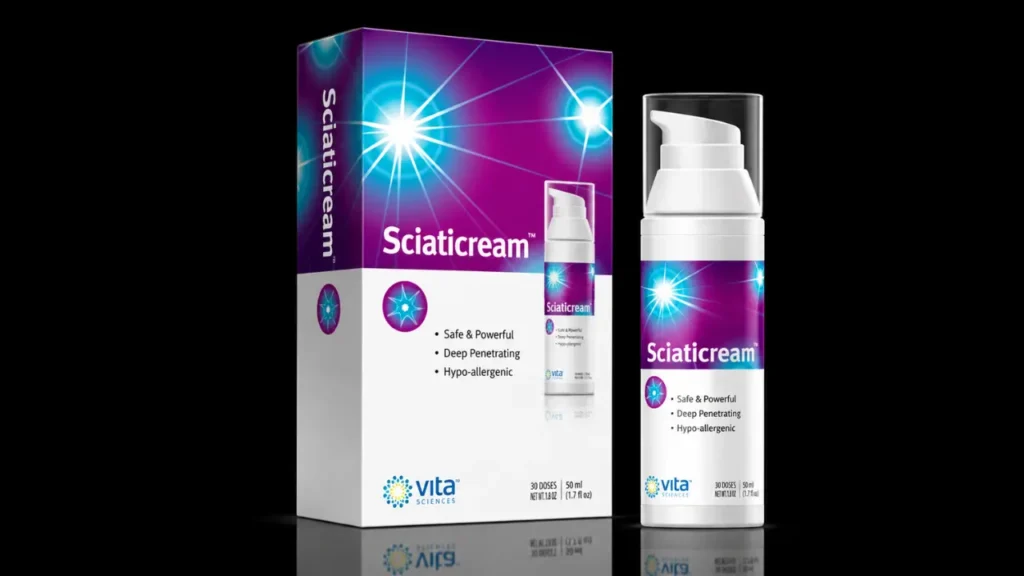
sciaticream stands out because it takes a straightforward topical approach to discomfort associated with the sciatic nerve. Rather than being marketed as a pill or supplement, it is designed to be applied directly to the skin around an area where discomfort is felt. That makes the formula, application method, and difference between its versions more important than broad promises about pain relief.
Vita Sciences markets sciaticream for people looking for topical support for sciatic nerve discomfort and related lower-back or leg discomfort. The brand also offers SciatiCream CF, a capsaicin-free version intended for consumers who prefer a different formulation.
There is a sensible way to look at the product: understand what is in it, understand what the manufacturer actually claims, and avoid confusing temporary symptom support with treatment of whatever may be causing persistent sciatic symptoms.
What Makes sciaticream Different From an Ordinary Pain Cream?
The main selling point of sciaticream is its specific positioning around sciatic and nerve-related discomfort. Traditional topical creams are often marketed broadly for muscles, joints, stiffness, or everyday aches. Sciaticream is presented with a narrower focus.
That distinction is useful, but it should not be taken too far. Sciatica is a description of symptoms rather than a single disease with one cause. Discomfort can involve the lower back, buttock, hip, or leg, and the reason behind those symptoms can vary from one person to another.
A topical cream can be used on the area where discomfort is experienced, but that does not mean it addresses the underlying source of a nerve problem.
This is why the product is more accurately considered a topical option for symptom support rather than a guaranteed solution for sciatica.
What Is Included in the Original sciaticream Formula?
The original sciaticream formula contains a combination of botanical ingredients, vitamins, oils, and other compounds. The manufacturer has listed MSM, arnica, vitamins B1, B6, and B12, vitamin D3, vitamin E, aloe, coconut oil, andrographis, and capsaicin among its ingredients.
The combination gives the product a different profile from a simple single-ingredient topical cream.
MSM
MSM, or methylsulfonylmethane, is commonly included in products designed around joint, muscle, and physical discomfort. Its presence in sciaticream contributes to the broader formulation intended for topical use.
However, seeing MSM on an ingredient list does not automatically establish that the finished product will relieve sciatic symptoms in every user. Ingredient research and evidence concerning a particular finished product are two different things.
Arnica
Arnica is a familiar ingredient in topical preparations and has been used in products associated with bruising, soreness, and muscle discomfort.
Its inclusion is part of the product’s botanical approach. As with the other ingredients, consumers should distinguish traditional or common topical use from evidence that the complete sciaticream formulation treats the cause of sciatica.
B Vitamins
The original formulation includes vitamins B1, B6, and B12. These vitamins have important roles in normal nervous-system function.
Their presence in a topical product, however, should not be interpreted as proof that applying the cream to the skin will correct a nutritional deficiency or repair an irritated nerve. That would go beyond what an ingredient list can establish.
Aloe, Vitamin E, and Coconut Oil
Aloe, vitamin E, and coconut oil are also part of the listed formulation. These ingredients are familiar in topical skincare and personal-care products.
Their inclusion contributes to the overall character of the cream, but consumers should not assume that every ingredient has been included specifically to treat sciatic nerve problems.
Capsaicin
Capsaicin is one of the most notable ingredients in the original formulation. It is associated with topical products designed for certain forms of pain and discomfort.
Its presence also creates the clearest difference between the original product and SciatiCream CF, which is marketed without capsaicin.
How SciatiCream CF Differs From the Original Formula
SciatiCream CF is particularly relevant for people comparing the available formulations because it is marketed as a capsaicin-free option.
The original sciaticream formula contains capsaicin, while the CF version removes it and retains other highlighted ingredients such as MSM, arnica, vitamins, and aloe.
That difference may matter to consumers who specifically prefer a capsaicin-free topical product. It also means that a review of one version should not automatically be treated as a review of the other.
The safest way to compare the two is to check the current ingredient labels and manufacturer information before making a decision. Product formulations can change, and older reviews may describe packaging or ingredients that are no longer current.
The CF version should therefore be treated as its own formulation rather than simply assuming it is the original product with a different label.
How sciaticream Is Intended to Be Used
sciaticream is designed as a topical product, meaning it is applied to the skin rather than taken internally.
The manufacturer’s information for the CF version describes application to the affected area and provides directions for adult use. The company has also packaged the product in an airless pump dispenser, which is intended to make dispensing the cream convenient and measured.
Following the current product label is more important than copying instructions from an old online review. Directions can change between formulations and product updates.
It is also important to remember that an adult-oriented topical product should not automatically be assumed to be appropriate for children or teenagers. Anyone under the stated age should involve a parent, guardian, pharmacist, or healthcare professional before using a product intended for adults.
What sciaticream Can and Cannot Do
The distinction between relieving discomfort and treating its cause is critical.
Sciatic symptoms can arise for different reasons, and the underlying issue may require more than a topical product. If discomfort continues, repeatedly returns, or interferes with normal activities, relying only on a cream may leave the real problem unaddressed.
That does not make sciaticream irrelevant. A topical product can have a place in a person’s approach to managing temporary discomfort if it is appropriate for that individual. The mistake is turning that limited role into a claim that the product can resolve every cause of sciatica.
The manufacturer’s product claims should also be separated from independently established medical evidence. A company can explain how it positions its product, but marketing language alone cannot establish that a particular cream will work equally well for everyone.
Reading sciaticream Reviews Without Falling for Hype
Reviews can tell potential buyers how other customers felt about the product, but they have clear limitations.
A person who says sciaticream helped them is describing an individual experience. That experience may be genuine, but it does not predict exactly what another person will experience.
The circumstances behind a review matter. Someone with occasional lower-back discomfort after physical activity is not necessarily dealing with the same problem as someone with persistent symptoms extending through the leg.
Review dates also deserve attention. An older review could relate to a previous formulation, different packaging, or a different price.
The strongest consumer research combines reviews with current product information instead of relying on star ratings or short testimonials alone.
Packaging and Price Details
Vita Sciences has marketed sciaticream in an airless pump dispenser. This type of packaging is practical because it allows the user to dispense the product without repeatedly opening a conventional jar.
The manufacturer has also listed the product at a price in the low-$20 range for a single pack. Prices are not permanent, though, and promotions or packaging changes can affect the amount a customer pays.
For that reason, anyone comparing the cost of sciaticream with another topical product should check the current selling price and the amount of product included rather than relying on an old article.
Price also should not be confused with effectiveness. A more expensive cream is not automatically a better cream, just as a cheaper product is not automatically inferior.
Who Should Think Carefully Before Using a Topical Product?
A topical product still deserves the same basic caution given to other personal-care or pain-relief products.
People with sensitive skin or known ingredient allergies should examine the current label carefully. The fact that a product is applied externally does not mean irritation or an unwanted reaction is impossible.
It is also important to consider the nature of the symptoms. Occasional discomfort may be very different from persistent or worsening pain.
If symptoms are severe, keep returning, or come with other concerning changes, getting appropriate medical advice is more sensible than repeatedly relying on a topical product without understanding the underlying problem.
For adults considering sciaticream, following the manufacturer’s current directions is essential. For anyone younger than the labeled age range, professional or responsible-adult guidance should come first.
Is sciaticream Worth Considering?
The answer depends on what a person expects from it.
If someone is specifically looking for a topical product marketed around sciatic nerve discomfort, sciaticream has a clear reason for attracting attention. The original formula has a distinctive combination of ingredients, and the availability of SciatiCream CF gives consumers a capsaicin-free alternative.
But expecting the cream to fix the underlying cause of sciatica is a different matter.
The most useful evaluation starts with realistic expectations. Look at the actual formulation, compare the original and CF versions, read current directions, and distinguish manufacturer claims from evidence about the finished product.
That approach is much more useful than assuming a product must work simply because its ingredient list looks impressive.
The Real Takeaway for Buyers
sciaticream has a straightforward proposition: provide a topical option for people dealing with discomfort associated with the sciatic nerve and related areas. Its original formula combines MSM, arnica, B vitamins, vitamin D3, vitamin E, aloe, coconut oil, andrographis, and capsaicin, while SciatiCream CF removes capsaicin for a different formulation.
Those details make the product worth examining, but they do not turn it into a universal treatment for sciatica.
The smartest way to judge sciaticream is to keep expectations grounded. Know which formula you are considering, check the current ingredient information, follow the label, and pay attention to symptoms that may require professional evaluation.
A topical cream can be one option for managing discomfort. It should never become an excuse to ignore the reason that discomfort keeps coming back.
FAQs
1. Can the original sciaticream and SciatiCream CF be used interchangeably?
Not necessarily. The formulations are different, most notably because the original version contains capsaicin while the CF version is marketed as capsaicin-free. Always check the current label and directions for the specific product.
2. Does having B vitamins in sciaticream mean it can repair a damaged nerve?
No. B vitamins play important roles in normal nervous-system function, but their presence in a topical formula does not prove that applying the product can repair nerve damage or correct a deficiency.
3. Why might someone choose the CF version?
The main reason is the absence of capsaicin. Someone who prefers a capsaicin-free formulation may find SciatiCream CF more suitable, although individual tolerance and product-label guidance still matter.
4. Are online sciaticream reviews enough to decide whether the product works?
No. Reviews can provide useful personal experiences, but they are not a substitute for reliable evidence. A review also may involve a different formulation, different symptoms, or circumstances that do not match another person’s situation.
5. What should someone do when discomfort continues despite using a topical cream?
Persistent or worsening symptoms should not simply be managed indefinitely with a cream. The underlying cause may need professional assessment, particularly when the discomfort is interfering with everyday activities or accompanied by other concerning symptoms.