
Introduction
masgonzola is at its best when the goal is to keep the character of blue cheese while making the overall texture softer and more approachable. The combination of Gorgonzola and mascarpone does exactly that. Gorgonzola brings the salty, tangy depth; mascarpone supplies the smoothness and richness. The result is useful in cooking because it can behave like a creamy spread, a sauce ingredient, or a finishing cheese without bringing the full intensity of straight blue cheese to every bite.
That balance is the real attraction. masgonzola does not need complicated preparation to make sense. Its strength comes from putting two very different dairy products together and letting each do a specific job.
The Two Cheeses Behind the Combination
Gorgonzola and mascarpone have very different personalities, which is precisely why the pairing works.
Gorgonzola is an Italian blue cheese made from cow’s milk. Its familiar blue-veined appearance comes from the molds used during production and maturation. Depending on the particular Gorgonzola, its flavor can be creamy, tangy, salty, earthy, or considerably stronger.
Mascarpone takes the opposite approach. It is a fresh, soft dairy product with a rich, smooth consistency and a mild flavor. It does not have the sharp blue-cheese character associated with Gorgonzola.
Put the two together and the contrast becomes the point.
The mascarpone softens the stronger side of Gorgonzola, while Gorgonzola gives the otherwise mild mascarpone a much more recognizable savory character. This is why masgonzola can feel richer and smoother than ordinary Gorgonzola while still retaining a distinct blue-cheese note.
How masgonzola Is Typically Prepared
There is no single universal formula that every producer has to follow.
Documented commercial examples include products made with roughly equal quantities of Gorgonzola and mascarpone. One reported product, for example, uses a 50/50 combination. That ratio is useful for understanding the style, but it should not be treated as a compulsory recipe for every masgonzola product.
Preparation can also affect the appearance.
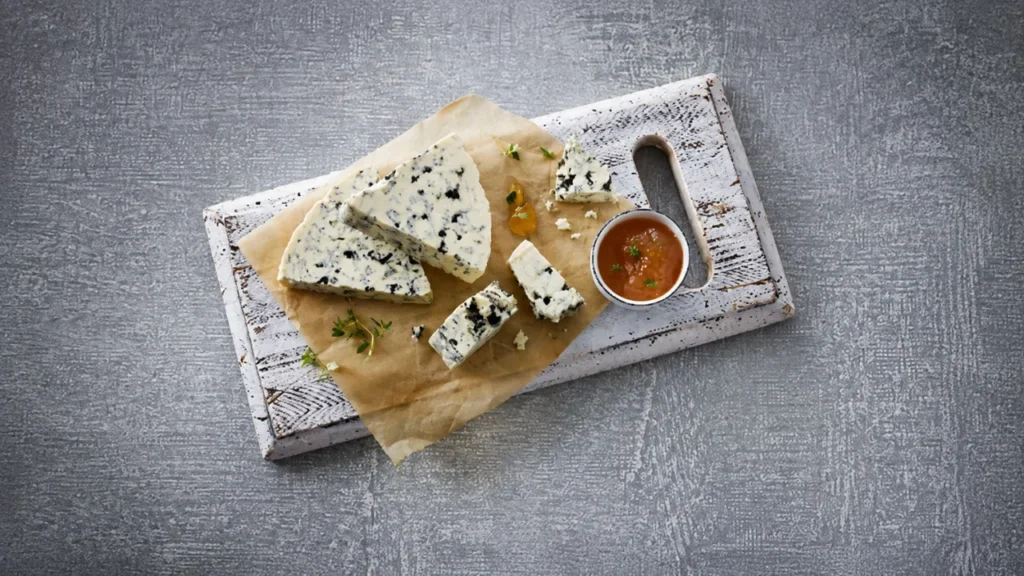
Some versions combine the cheeses into a relatively even creamy mixture. Others retain a more obvious layered appearance, with pale mascarpone alongside or between portions of blue-veined Gorgonzola.
That difference matters when buying the product, because two versions can look quite different while following the same basic idea.
A higher proportion of mascarpone will usually produce a softer and milder result. Increasing the proportion of Gorgonzola will push the flavor toward the stronger, saltier side associated with blue cheese.
There is therefore no single appearance or intensity that can accurately represent every product sold under the name.
What masgonzola Tastes Like
The first thing most people notice is the creaminess.
Then comes the Gorgonzola.
The mascarpone gives the cheese a buttery, rich quality, while the Gorgonzola contributes tanginess, saltiness, and the earthy character associated with blue-veined cheese. The exact balance depends on the proportions used and the particular Gorgonzola involved.
A typical masgonzola-style product can be:
- Smooth and creamy
- Mildly salty
- Tangy
- Rich and buttery
- Gently blue-cheesey
- Softer in flavor than straight Gorgonzola
This makes masgonzola particularly interesting for people who enjoy the flavor of blue cheese but do not necessarily want it to dominate an entire dish.
It is also why the cheese works so well in recipes where texture matters as much as flavor.
masgonzola and Gorgonzola Are Not the Same Thing
The two products are closely connected, but treating them as interchangeable would miss the main difference.
Gorgonzola is a specific Italian blue cheese with Protected Designation of Origin status. Its production is governed by defined rules connected to ingredients, production areas, and manufacturing. masgonzola does not have a separate verified PDO specification of its own.
The practical difference is just as important.
Straight Gorgonzola makes sense when a recipe needs a clear blue-cheese presence. If you are preparing a cheese board and want a cheese that stands on its own, Gorgonzola has the stronger identity.
masgonzola makes more sense when creaminess is part of the objective.
The mascarpone changes both the texture and the overall intensity. A sauce made with the combination can feel smoother than one based entirely on Gorgonzola. A spread can be easier to work with. A pasta dish can get a creamy finish without relying on a large quantity of strong blue cheese.
Neither is simply a better version of the other. They solve different cooking problems.
Why the Cheese Works So Well in Pasta
Pasta is probably one of the most natural places to use masgonzola.
The creamy consistency allows it to become part of a sauce rather than sitting separately on the plate. Gorgonzola provides enough flavor to make the sauce interesting, while mascarpone helps create the smooth body that coats the pasta.
Mushrooms are an especially sensible pairing because their earthy flavor sits comfortably beside blue cheese. Pears can introduce sweetness, while walnuts provide crunch.
The important point is restraint.
A pasta sauce containing masgonzola, heavy cream, butter, and several other rich cheeses can quickly become too dense. The combination works better when the cheese is allowed to provide richness while vegetables, herbs, fruit, or pasta water provide contrast.
That approach also lets the Gorgonzola remain noticeable instead of burying it under additional dairy.
Using masgonzola in Risotto
Risotto benefits from creaminess, but that does not mean it needs endless cream.
The rice already develops a naturally rich texture during cooking, so masgonzola can be used toward the end to add another layer of flavor and smoothness.
Mushrooms make an obvious partner. Their earthy character complements the blue-cheese notes without requiring a complicated seasoning strategy.
Pear can take the dish in another direction. The fruit introduces sweetness against the saltiness of the cheese, creating a more pronounced contrast.
Walnuts can add texture, particularly when the finished risotto is otherwise soft.
The mistake to avoid is making the cheese the entire dish. masgonzola should give the risotto character, not erase the rice, vegetables, or other main ingredients.
A Strong Choice for Crostini and Appetizers
Simple appetizers can actually show off masgonzola better than complicated recipes.
Spread it over toasted bread and add thin slices of pear. Add walnuts if you want crunch. A small amount of honey can work when the cheese is particularly tangy.
The combination succeeds because every component does something different.
The bread brings texture. The cheese brings richness and savory depth. The fruit adds sweetness and freshness. The nuts bring crunch.
That is a better use of masgonzola than piling it onto an appetizer already filled with cream, butter, and other rich cheeses.
When an ingredient is naturally rich, contrast is usually more useful than adding even more richness.
masgonzola on Pizza and Flatbread
Pizza requires a little more care because strong cheese flavors become more concentrated during baking.
A moderate amount of masgonzola can work well on a simple flatbread, particularly when paired with ingredients such as pear, mushrooms, walnuts, or roasted vegetables.
Pear is especially effective because its sweetness offsets the tangy and salty cheese.
Mushrooms move the flavor in a more savory direction. Roasted vegetables can provide sweetness and texture without competing with the cheese.
The best approach is to keep the topping list controlled. If the pizza already contains several strong cheeses, cured meats, heavy sauces, and rich toppings, adding masgonzola can push the whole thing beyond balance.
A restrained pizza usually gives the cheese more room to show what makes it useful.
Sweet and Savory Pairings That Make Sense
The richness of masgonzola gives you plenty of room to experiment, but the strongest pairings tend to have a clear reason behind them.
Pear is one of the easiest choices because its sweetness contrasts with the salty, tangy cheese.
Apples can provide a similar effect with more acidity and crunch.
Grapes are another natural option for a cheese board because their freshness helps offset richness.
Walnuts bring a deeper, toasted flavor that complements both mascarpone and Gorgonzola.
Roasted onions and mushrooms work on the savory side. Their sweetness and earthy character fit naturally with the cheese.
These combinations are not about making the dish more complicated. They work because they create contrast.
How to Tell the Difference Between Reliable and Weak Claims About masgonzola
The biggest problem with online information about masgonzola is not the basic food itself. It is the amount of unsupported history and terminology attached to it.
Current food sources consistently describe the combination around Gorgonzola and mascarpone. Commercial examples also support that interpretation.
What should be treated more carefully are claims that masgonzola is an ancient cheese with a clearly documented origin, a standardized aging system, officially recognized varieties, or its own protected geographical status.
The available evidence does not establish those claims convincingly.
It is also misleading to treat masgonzola as simply another spelling of Gorgonzola. Gorgonzola has its own established identity and PDO status, while the combination with mascarpone creates a different product.
For readers who want accurate information, the distinction is simple: focus on the actual ingredients and the specific product rather than accepting dramatic origin stories without supporting evidence.
Buying masgonzola Without Getting Confused by the Label
Finding the exact word on a package may not always be easy.
Products based on the same combination can be sold under descriptions such as Gorgonzola with Mascarpone, Gorgonzola and Mascarpone, or Gorgonzola e Mascarpone. The name masgonzola may not appear prominently, even when the product fits the same basic description.
That means the ingredient list is more useful than the front label alone.
Look for Gorgonzola and mascarpone as the principal components. If you care about salt, fat, calories, milk allergens, or other dietary details, check the nutrition panel for that particular product rather than relying on generic figures found online.
Different ratios can change the final product considerably.
A cheese with more mascarpone may be noticeably softer and milder. A version with more Gorgonzola can have a stronger blue-cheese character.
Storage and Handling Matter
masgonzola should be treated as a refrigerated dairy product.
Keep it chilled according to the manufacturer’s instructions and keep opened portions properly covered. Do not leave it sitting at room temperature for extended periods, particularly in warm conditions.
The texture will also change as the cheese warms. A refrigerated portion can be firmer, while a short period outside the refrigerator can make it softer and easier to spread.
That does not mean it should be left out indefinitely. Dairy products require sensible food-safety handling.
When buying a packaged product, the label remains the best source for storage instructions and use-by information because individual formulations and packaging can differ.
The Best Way to Cook With It
The smartest way to use masgonzola is to give it a supporting role.
Let it enrich a sauce rather than replacing every other ingredient. Let it add depth to risotto without covering the rice. Put it on toasted bread with fruit instead of surrounding it with several other rich toppings.
Its greatest strength is balance.
Gorgonzola gives the mixture its personality. Mascarpone makes that personality smoother and easier to integrate into food. Remove either side and you lose the reason the combination is interesting.
That is also why simply adding more cheese is rarely the answer. The right amount should make you notice the cheese while still allowing the rest of the dish to remain recognizable.
The Clear Takeaway
masgonzola is most interesting not because it needs an elaborate story, but because the combination itself makes culinary sense. Gorgonzola supplies the salty, tangy blue-cheese character; mascarpone supplies softness, richness, and a smoother finish.
The evidence supports treating masgonzola as a Gorgonzola-and-mascarpone specialty rather than inventing a separate historic cheese tradition around it. Commercial versions can differ in ratio, appearance, and intensity, so the individual product matters.
For cooking, the rule is even simpler: use the cheese where creaminess and blue-cheese flavor need to meet. Pasta, risotto, crostini, pizza, and carefully chosen sweet-savory pairings are where it earns its place. The best masgonzola dish is not the richest one. It is the one where every ingredient still has something to say.
FAQs
1. Can masgonzola replace cream cheese in a recipe?
It can work in selected savory recipes where a stronger cheese flavor is welcome, but the result will not taste like ordinary cream cheese. masgonzola brings Gorgonzola’s tangy, blue-cheese character, so it is better suited to sauces, spreads, pasta, and savory dishes than neutral recipes.
2. Why does one masgonzola product taste stronger than another?
There is no single universal ratio for the combination. Products can contain different proportions of Gorgonzola and mascarpone, and the characteristics of the Gorgonzola used can also differ. A higher Gorgonzola proportion will normally produce a stronger blue-cheese profile.
3. Does masgonzola have to contain equal amounts of Gorgonzola and mascarpone?
No. A 50/50 combination appears in documented commercial examples, but it is not a universal requirement. Different products can use different proportions or presentation methods.
4. Why might I see Gorgonzola and mascarpone on a package instead of masgonzola?
The food may be marketed using a descriptive name rather than the shorter name. Products matching the same basic combination have been sold under names such as Gorgonzola with Mascarpone and Gorgonzola e Mascarpone.
5. Is masgonzola protected like Gorgonzola?
Gorgonzola has PDO protection, but there is no separate verified PDO specification for masgonzola. It is more accurate to treat masgonzola as a Gorgonzola-and-mascarpone specialty rather than as a separately protected cheese variety.