
Introduction
The fastest way to turn a normal household bin into a summer nuisance is to leave food waste exposed and assume the lid will take care of everything. Once temperatures climb, flies become more active, food breaks down faster and a wheelie bin can become an attractive place for them to lay eggs. The answer is not complicated, but it does require better bin habits.
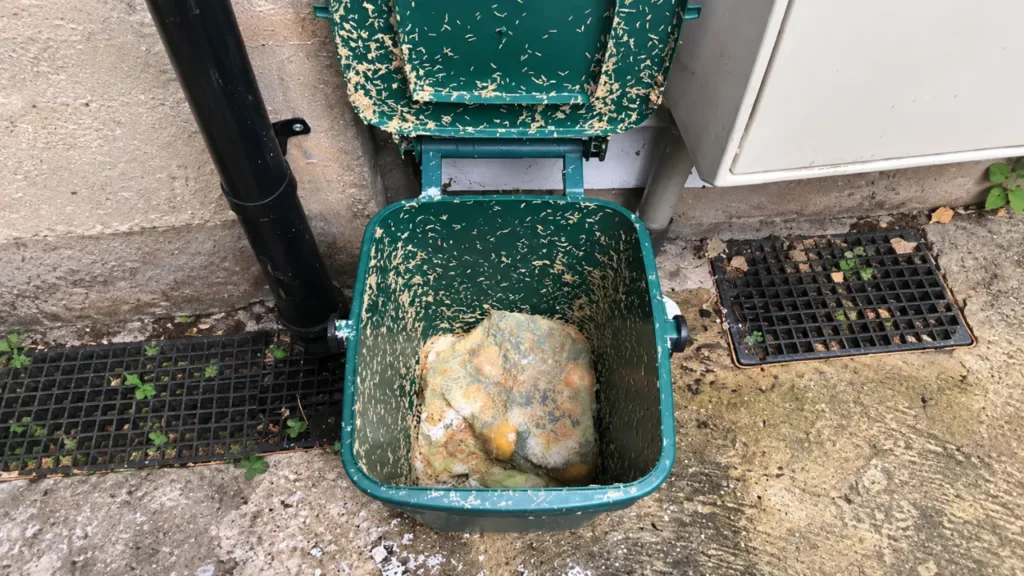
The connection between maggots wheelie bins hot weather is particularly noticeable when meat, fish, pet waste, nappies or other organic rubbish is sitting inside a warm container. Fly eggs can hatch rapidly in favourable conditions. Hastings Borough Council says eggs can hatch into maggots within 24 hours in warm weather, while North Devon Council gives a possible summer timeframe of roughly eight to 20 hours.
That explains why a bin can look completely normal after one collection and suddenly have a visible problem a day or two later.
Why hot weather makes wheelie bins harder to manage
Heat does not create maggots out of nowhere. Flies still need access to suitable organic material before they can lay eggs.
What hot weather does is make the conditions more favourable. Waste can become warmer, odours can become stronger and decomposition can happen more quickly. Those changes make food-containing rubbish more attractive to flies.
West Suffolk Council specifically advises keeping wheelie bins out of direct sunshine because sunlight warms the bin, increases smells and can attract flies. Cambridge City Council gives similar advice, noting that bins can become smelly in warm weather and that storing them away from direct sunlight can help.
This is why maggots wheelie bins hot weather should be treated as a prevention issue rather than something to deal with only after larvae appear.
A warm bin containing properly sealed rubbish is one thing. A warm bin containing exposed food scraps is quite another.
The food inside the bin matters more than the bin itself
If you want to prevent maggots, start with what goes into the wheelie bin.
Flies are attracted to food and decomposing organic material. Meat and fish are particularly troublesome because they can produce strong smells as they break down. Pet food, pet waste, nappies and leftover meals can also provide suitable material.
West Berkshire Council says flies are attracted to odours and moist or decomposing material, with meat and fish especially attractive because of their high protein content.
That gives homeowners a useful rule: do not make it easy for flies to reach food.
Food should not be left uncovered on kitchen surfaces before disposal. Pet food should not sit exposed either. Fareham Borough Council points out that flies can lay eggs on food before it even reaches the outdoor bin.
So the problem can actually begin inside the house.
Secure the waste before it reaches the wheelie bin
Strong-smelling waste should be contained properly.
Securely tie rubbish bags and, where permitted by local waste rules, consider an additional bag for particularly troublesome waste such as meat scraps, fish remains, nappies or pet waste. Several councils recommend double-bagging these materials as part of their summer bin guidance.
The objective is not to make the rubbish disappear. It is to reduce the opportunity for flies to land directly on it.
Squeezing excess air from bags before tying them is another measure recommended by councils because it can reduce smells and slow decomposition.
Keep the wheelie-bin lid properly closed
A closed lid is one of the simplest and most important defences against flies.
If the lid is left open, even briefly, flies can reach the waste. A lid that cannot close because the bin is overfilled creates the same problem.
Wyre Forest District Council specifically warns that even a slightly open wheelie-bin lid can allow flies to get inside.
For households dealing with maggots wheelie bins hot weather, this small detail can make a major difference.
Do not treat the lid as an afterthought. Once the bag is placed inside, close the lid completely.
If the lid is damaged, does not sit properly or is missing, contact the relevant waste service about repair or replacement. A defective container is much harder to manage properly, particularly during a prolonged hot spell.
Keep your wheelie bin away from direct sunlight
Moving the bin into shade is a sensible step when there is a suitable place to do so.
A shaded position can reduce how much the container heats up during the day. That can help limit strong smells and make the environment less attractive to flies.
It is not a magic solution, though.
A shaded bin containing loose food waste can still attract flies. Shade should therefore be combined with good waste storage rather than treated as the main answer.
The strongest approach to maggots wheelie bins hot weather is simple: keep the waste contained, keep the lid shut and reduce unnecessary heat exposure.
Make sure the bin remains accessible and safely positioned for collection. Do not place it somewhere that blocks entrances, pathways or creates a trip hazard simply to keep it shaded.
Clean food packaging before it goes into the rubbish
Food residue can be easy to overlook.
A container may appear empty but still have enough residue to produce an unpleasant smell once it sits in a warm wheelie bin. Food packaging that cannot be recycled can still be rinsed where appropriate before disposal.
West Suffolk Council recommends rinsing food packaging to reduce smells, while Cambridge City Council also advises removing food residue from suitable packaging before recycling.
The same principle applies to recyclable containers. Rinsing food cans, bottles and jars can reduce smells that attract flies and other pests.
This is a small habit, but it becomes more valuable as temperatures rise.
Keep the inside of the bin clean
A wheelie bin does not need to be spotless every day, but allowing food residue and dirty liquid to accumulate is asking for trouble.
Leaks from rubbish bags can collect at the bottom. Small pieces of food can remain after a bag is removed. Over several collection cycles, that residue can contribute to unpleasant smells.
Regular cleaning removes that build-up.
West Suffolk, Fareham and Cambridge councils all recommend cleaning or rinsing wheelie bins as part of good summer bin hygiene.
After the bin has been emptied, inspect the bottom and sides. If there is visible food residue or leaked material, clean it with an appropriate household cleaning product according to its label instructions.
Never mix cleaning chemicals. If a product requires protective measures or specific handling, follow the manufacturer’s instructions.
Once cleaned, let the bin dry before adding fresh rubbish.
What to do when you already have maggots
Finding maggots can be unpleasant, but there is no reason to panic.
The first step is to keep the waste contained. Avoid leaving the lid open unnecessarily.
In many cases, the majority of maggots will leave with the waste when the bin is emptied. Hastings and Fareham councils both advise cleaning the bin after collection to deal with anything remaining.
Once the bin is empty, wash it with hot water and a suitable household cleaning product, following the product’s instructions. Allow it to dry before putting new waste inside.
The important point is to deal with the source as well as the visible problem.
If old food residue remains in the bin, cleaning only the visible larvae will not address what attracted the flies in the first place.
Why collection frequency is not necessarily the problem
It is easy to assume that maggots mean rubbish has been sitting in the bin for too long.
That is not necessarily true.
Fly eggs can hatch quickly during warm weather. Hastings Borough Council explains that maggots can develop in food, rubbish and communal bins wherever flies can reach suitable waste, and says the issue is not caused by a particular collection service.
Wealden District Council similarly notes that maggots can appear within roughly eight to 12 hours after eggs are laid in warm weather.
This matters because changing the collection schedule is not the only answer.
A household can have a normal collection routine and still experience maggots if flies have access to food waste.
The better question is not simply, “How long has this rubbish been in the bin?”
It is, “Could flies reach it?”
The kitchen can be where the problem starts
Outdoor bin hygiene gets most of the attention, but the kitchen deserves equal consideration.
Food left uncovered on a counter can attract flies before the rubbish is ever taken outside. Once eggs are laid on food, moving that material into the wheelie bin does not remove the problem.
Salford City Council warns that flies can lay eggs on exposed food and that, in warm weather, those eggs can hatch within 24 hours.
Keep kitchen bins closed. Put food waste into the appropriate container promptly rather than allowing it to sit exposed.
If your local authority operates a separate food-waste collection, use the supplied caddy and liners according to local instructions. North Devon Council, for example, recommends using its food-waste system rather than putting food waste into general wheelie bins.
This can significantly reduce the amount of organic material sitting in a general rubbish bin.
Nappies and pet waste need extra attention
Food is not the only material that attracts flies.
Nappies and pet waste can also create unpleasant smells and provide organic material that flies may target. Several councils therefore recommend securely bagging these materials and, in some cases, double-bagging them.
Pet food deserves attention too.
An unfinished bowl of wet pet food left outside can attract flies before the waste ever reaches the bin. West Suffolk Council specifically advises against leaving pet food uncovered.
The same principle applies throughout the household: organic waste should not be left exposed when it can be contained promptly.
Common mistakes that make summer bin problems worse
The biggest mistake is putting loose food waste straight into the wheelie bin.
The second is leaving the lid open because the bin is full. Overfilling is therefore more than an inconvenience; it can prevent the container from doing its job.
Another mistake is leaving the bin in strong direct sunlight when a shaded location is available.
Ignoring leaks is also a bad idea. A bag that has leaked onto the bottom of the bin leaves behind material that can continue producing smells after the original rubbish has been collected.
Finally, waiting until maggots appear before cleaning the bin turns a simple maintenance task into an unpleasant cleanup.
The better approach is preventative.
A simple hot-weather bin routine
During particularly warm periods, keep the routine straightforward.
Check that food is covered before disposal. Bag food-related rubbish securely. Double-bag particularly troublesome waste when local rules allow it. Keep the wheelie-bin lid fully closed. Store the container away from direct sunlight if practical.
After collection, inspect the empty bin.
If there is liquid, food residue or a strong smell, clean it rather than leaving the residue for the next collection cycle.
If your council provides separate food-waste collection, use it correctly and follow the local rules about liners and accepted materials.
These steps address the main conditions that allow the problem to develop.
Are maggots in a wheelie bin a health danger?
Maggots are certainly unpleasant, but the evidence from council guidance does not support treating their presence as an automatic health emergency.
Hastings Borough Council and Salford City Council both state that there is no evidence that maggots themselves directly cause health problems.
That does not mean bin hygiene should be ignored.
Food waste, decomposing rubbish, flies and dirty surfaces are good reasons to handle waste carefully and wash your hands after cleaning a bin or dealing with rubbish.
Good hygiene is the sensible response; panic is not.
When recurring maggots indicate a bigger bin problem
If maggots keep returning despite sensible precautions, inspect the container itself.
Does the lid close properly?
Is there a crack?
Is the bin being overfilled?
Is food waste being placed inside without secure bags?
Is there old residue at the bottom?
Is the container sitting in full sunlight all afternoon?
Is food being left uncovered inside the house?
These questions are more useful than simply treating each new batch of maggots.
A damaged bin should be reported to the relevant council or waste provider. Some councils specifically provide repair or replacement services for damaged containers.
For communal bins, the same principles apply, although larger shared containers can hold considerably more waste. Hastings notes that communal bins can be more prone to maggots during hot weather because they contain waste from multiple households.
The practical answer to summer maggot problems
There is no reason to accept maggots as an unavoidable part of owning a wheelie bin.
Hot weather makes the situation easier for flies, but household behaviour determines whether flies can reach suitable waste. The strongest prevention measures are also the least complicated: keep food covered, secure rubbish bags, close the lid, reduce direct sunlight, rinse food residue and clean the container regularly.
That is the real lesson behind maggots wheelie bins hot weather. Do not wait until the problem is visible. By then, flies have already found the waste and conditions have already worked in their favour.
A clean, closed and properly managed bin is a much harder target for flies. In summer, that few minutes of attention after each collection can save you from a far more unpleasant job later.
FAQs
1. Can maggots appear only a day after putting rubbish in the bin?
Yes. Warm conditions can speed up the fly life cycle considerably. Council guidance reports that eggs can hatch into maggots within about 24 hours, with some guidance giving an even shorter timeframe under favourable summer conditions.
2. Why are maggots appearing when I do not put much food in my bin?
A small amount of the right type of waste can still attract flies. Meat residue, fish scraps, pet waste, nappies or liquid collecting at the bottom can be enough. Food may also have been exposed before it was placed in the outdoor bin.
3. Should I leave my wheelie bin open to let it dry?
No. An open lid gives flies easier access to the waste. If the bin needs cleaning, empty it, wash it appropriately and allow it to dry before putting new rubbish inside. During normal use, keep the lid closed.
4. Can I prevent maggots by keeping my bin in the shade?
Shade can help because direct sunlight warms the bin and can increase smells that attract flies. It is not enough on its own, though. Secure bags, a closed lid, clean surfaces and proper food-waste disposal still matter.
5. What is the first thing I should check if maggots keep coming back?
Check whether flies can reach food or other organic waste. Then inspect the lid, look for leaks or residue inside the bin, and consider whether the container is sitting in direct sunlight. If the bin is damaged and cannot close properly, contact your local waste service.