
Introduction
Some fruits are worth growing because they are fashionable. žižole are worth growing for a better reason: they are useful. The fruit can be eaten fresh, dried for later use, or incorporated into food products, while the tree itself is well suited to warm and relatively dry growing conditions. That combination gives žižole an advantage that many less familiar fruit crops simply do not have.
Known botanically as Ziziphus jujuba, jujube has a long agricultural history and is now grown across parts of Asia, Europe, the Mediterranean, Australia, and other warm regions. It is particularly associated with China, where it has been cultivated for thousands of years. Modern research has also renewed interest in its nutritional composition, phytochemicals, cultivation, and potential food applications.
The real appeal, however, is much simpler. A ripe fruit can be crisp and pleasantly sweet, while the dried version becomes softer, denser, and much sweeter. Few fruits change character so noticeably between the tree and the pantry.
Why žižole Stand Out as a Fruit Crop
The strongest argument for žižole is versatility.
A fruit tree needs to offer more than an attractive harvest to justify space in a home garden or orchard. It should produce something people actually want to eat, cope reasonably well with local conditions, and offer practical ways to preserve the harvest. Jujube checks those boxes.
The fruit contains carbohydrates, dietary fiber, vitamins, minerals, and plant compounds such as phenolics and flavonoids. Recent reviews also identify organic acids, sugars, amino acids, fatty acids, and other compounds in jujube fruit. The exact composition varies according to cultivar, maturity, growing conditions, and processing method.
That last point matters. A fruit harvested fresh from the tree should not be treated nutritionally as identical to a heavily dried or processed product.
There is also a practical advantage in the tree’s ability to perform in hot, dry environments. Jujube has become increasingly important in arid and semiarid areas, and its adaptability is one reason it has spread far beyond its original cultivation regions.
The Fruit Changes Dramatically as It Ripens
One of the easiest ways to appreciate žižole is to taste the fruit at different stages of maturity.
Fresh fruit has a crisp character
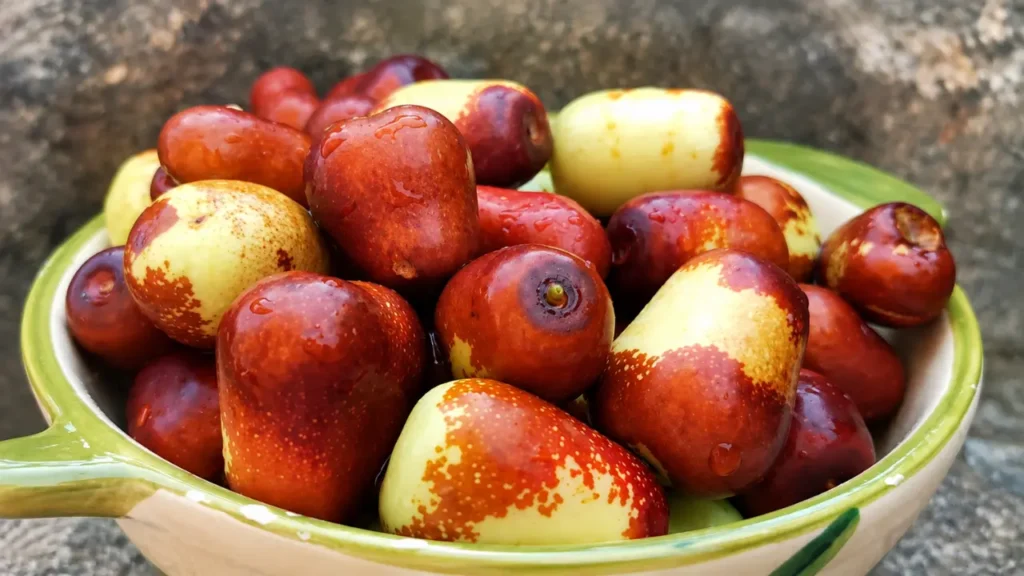
Fresh jujube can have firm, crisp flesh with a flavor ranging from mildly tart to distinctly sweet. The skin and flesh change as the fruit matures, and cultivar differences can be considerable.
Some fruits are rounder, while others are elongated. Size also varies, which is why two jujube trees can produce noticeably different-looking harvests.
The best fresh fruit is usually eaten simply. Wash it, remove the pit, and let the fruit’s texture and flavor speak for themselves.
Drying creates a completely different experience
Dried jujube is where the crop becomes especially practical.
As water is removed, the fruit becomes denser and sweeter. The texture becomes chewy rather than crisp, making dried jujube useful as a snack or ingredient in other foods.
Research into jujube processing highlights drying and other forms of preservation because fresh fruit has a relatively short shelf life under ordinary storage conditions. One review reports that fresh jujube may keep for only around ten days without controlled storage, making processing important when the harvest needs to last longer.
For growers, this changes the economics of the crop. A large harvest does not have to be consumed immediately if part of it can be dried or processed.
What the Nutritional Profile of žižole Looks Like
Jujube has attracted scientific attention because it combines conventional nutrients with a range of bioactive plant compounds.
Research reviews identify vitamin C as an important component, alongside dietary fiber, carbohydrates, minerals, phenolic compounds, flavonoids, and other phytochemicals. More recent work also highlights potassium, calcium, magnesium, and phosphorus among the minerals found in jujube fruit.
The fruit’s nutritional profile is not fixed.
Fresh and dried fruit are not nutritionally identical
Fresh fruit contains a large amount of water. Drying removes that water, so the remaining sugars and other components become more concentrated by weight.
That is why dried žižole taste substantially sweeter than fresh fruit.
It is also why portion size matters. A person eating fresh fruit may consume a relatively large amount of water along with the fruit’s nutrients, while dried fruit packs considerably more fruit material into a smaller serving.
This is not a reason to avoid dried jujube. It simply explains why fresh and dried forms should be considered different foods from a nutritional perspective.
The Plant Compounds Are Interesting, but Claims Need Restraint
Jujube research often focuses on compounds such as polyphenols, flavonoids, polysaccharides, and triterpenic acids.
Laboratory studies have reported antioxidant, anti-inflammatory, and other biological activities associated with jujube compounds. Reviews have also discussed potential effects involving metabolic, immune, gastrointestinal, and other biological processes.
That research is interesting, but it should not be turned into exaggerated health promises.
A laboratory finding is not the same as proof that eating jujube treats a disease. Researchers themselves have called for stronger clinical evidence to clarify the health effects and possible applications of jujube compounds.
The better reason to eat žižole is that they are a nutritious fruit with a distinctive flavor and useful culinary properties. There is no need to turn them into a miracle cure.
How žižole Fit Into Everyday Food
The easiest preparation remains the most appealing one: fresh fruit eaten as a snack.
Ripe jujube can also be paired with other fruits, chopped into dishes, or used where a crisp sweet element is wanted. The dried form has much greater flexibility because it can be stored and used after the fresh harvest has disappeared.
Dried fruit has the biggest practical advantage
Dried žižole can be kept for later use and added to foods where concentrated sweetness is desirable.
They can work in snack mixtures, desserts, cooked preparations, and other recipes that benefit from a chewy dried fruit. Their naturally sweet flavor means that additional sweetening may not always be necessary.
Jujube is also being studied as an ingredient for processed and functional food products. Researchers have examined products made from jujube because the fruit contains nutritional and bioactive components that can remain relevant after processing.
For home cooks, the lesson is straightforward: do not think of jujube as a fruit that only belongs on a plate. Its real strength appears when fresh and preserved forms are both used.
Growing a žižole Tree Requires the Right Site
The tree’s reputation for toughness can sometimes create the wrong impression. Drought tolerance does not mean a newly planted tree can be ignored.
Young plants still need adequate water while establishing their roots. Once established, however, jujube can handle dry conditions better than many fruit crops.
Sunlight matters
A sunny location is the safest choice for reliable growth and fruit production.
Warm conditions suit jujube particularly well, which explains its success across tropical, subtropical, Mediterranean, arid, and semiarid environments. Research describes the crop as increasingly important in marginal dry areas because of its ability to adapt to challenging conditions.
Soil should drain properly
A tree that tolerates drought is not necessarily a tree that enjoys standing in wet soil.
Good drainage gives the roots a better environment, particularly during periods of heavy rainfall or excessive irrigation. Gardeners should avoid treating drought tolerance as an excuse for poor site selection.
The basic formula is simple: plenty of sun, suitable warmth, adequate establishment water, and soil that does not remain saturated.
When a Jujube Tree Starts Producing
Jujube is appealing to home growers partly because it does not necessarily require an exceptionally long wait before producing its first fruit.
Under suitable conditions, young trees can begin fruiting relatively early, although the exact timing depends on cultivar, climate, planting material, and care.
A young tree should not be judged by its first harvest. Fruit production normally becomes more meaningful as the tree establishes itself and develops a stronger canopy and root system.
This is particularly important when comparing trees from different sources. A grafted or named cultivar may behave differently from a seed-grown tree, so two plants of the same species should not automatically be expected to produce identical results.
Harvesting žižole at the Right Time
Harvest timing has a major influence on the final eating experience.
Jujube fruit changes color and texture as it matures. Depending on the cultivar and intended use, growers may harvest fruit for fresh eating or allow it to progress further toward the stage preferred for drying.
The harvest period can extend across several weeks and differs between cultivars and growing regions.
Rather than relying on a single calendar date, growers should inspect the fruit. Color, firmness, and taste provide more useful information about readiness.
If the goal is fresh eating, texture becomes especially important. If the fruit will be dried, a different degree of maturity may be preferable.
That flexibility is another reason jujube works well as a home orchard crop.
Cultivars Can Change the Experience Completely
Not all jujube fruit tastes or looks the same.
Cultivars differ in size, shape, texture, maturity period, sweetness, and suitability for particular uses. Research on jujube has placed significant emphasis on germplasm resources, cultivar identification, breeding, genetics, and cultivation practices because the diversity within the crop is substantial.
This is important for anyone planning to plant a tree.
A gardener interested in fresh snacking should look for fruit characteristics suited to fresh consumption. Someone interested in drying may have different priorities. Harvest timing can also matter when local weather limits the length of the growing season.
Buying a known cultivar is therefore a smarter decision than choosing a tree without knowing what type of fruit it is expected to produce.
The Long History Behind the Crop
Jujube is not a recently discovered fruit.
It is considered one of the oldest cultivated fruit trees, with a particularly deep history in China and cultivation extending back thousands of years. Modern research describes the crop as originating in the middle and lower reaches of China’s Yellow River region and notes its spread to dozens of countries.
That history helps explain why the fruit appears in so many different food traditions.
A crop does not remain important for centuries by accident. Farmers continue growing plants when those plants provide enough value to justify the work.
Jujube’s combination of edible fruit, preservation potential, adaptability, and nutritional value gives a convincing explanation for its staying power.
Why Mediterranean Growers Have Reason to Like žižole
Mediterranean growing conditions can be demanding. Summers can be hot and dry, while water availability may become a serious concern.
That makes drought-tolerant fruit trees especially attractive.
Jujube fits this environment well, which helps explain its presence in Mediterranean regions and its potential for gardens where other fruit trees require more intensive watering.
The tree also has value beyond fruit production. It can occupy a place in a home landscape while still producing a harvest that can be eaten fresh or preserved.
That dual purpose makes žižole more practical than a purely ornamental plant.
Fresh, Dried, or Processed: Choosing the Best Form
There is no single best form of jujube.
Fresh fruit is the clear choice when texture matters. It gives you the crispness and lighter flavor that disappear during drying.
Dried fruit is better when convenience and storage matter. Its concentrated sweetness also makes it easier to use as an ingredient.
Processed jujube products take the idea further. Research has explored jujube in food formulations and other products because the fruit offers both nutritional components and useful processing characteristics.
For a home grower, using more than one form is probably the smartest approach. Eat the best fresh fruit immediately, then preserve the surplus rather than allowing a good harvest to become waste.
The Biggest Mistake Is Expecting a Miracle Fruit
There is plenty of scientific interest surrounding jujube, but exaggerated claims weaken the story.
The fruit contains genuinely interesting nutrients and bioactive compounds. Studies have reported promising biological activity, and researchers continue investigating those properties. But human clinical evidence is still not strong enough to turn every laboratory observation into a medical claim.
That distinction makes žižole more credible, not less impressive.
It is perfectly reasonable to eat the fruit because it tastes good and contributes useful nutrients to the diet. It is also reasonable to be interested in the research. What is not reasonable is presenting preliminary findings as guaranteed medical outcomes.
Good food does not need exaggerated promises.
The Real Value of žižole Is Its Combination of Qualities
Jujube succeeds because several useful characteristics come together in one crop.
The fruit is enjoyable fresh. It becomes highly practical when dried. Its nutritional profile is worth studying. The tree can perform in warm and relatively dry conditions. Its history stretches back thousands of years. And modern horticultural research continues to explore its cultivars, cultivation, processing, and biological compounds.
None of those qualities needs to be exaggerated.
For gardeners, the tree is a sensible choice where the climate fits. For cooks, the fresh and dried fruit offer two distinct ingredients. For anyone interested in traditional crops, its history provides a fascinating connection between ancient cultivation and modern food production.
That is enough.
The Better Way to Look at žižole
The next time you encounter žižole, do not judge them simply because they are less familiar than apples, grapes, or dates.
Taste the fresh fruit first. Compare it with the dried version. If you have a suitable climate and enough garden space, consider what a mature jujube tree could contribute to the landscape.
The strongest argument for this fruit is not that it is exotic. It is that it has practical value.
A crop that can provide fresh food, preserved food, useful nutrients, and reliable performance in warm conditions deserves more than passing curiosity. žižole have already proved that over centuries of cultivation. The question now is whether modern gardeners and food lovers are willing to give them the attention they have earned.
FAQs
1. Can the pit of a jujube fruit be eaten?
No. The fruit should be eaten around the central pit, which is hard and should be removed rather than chewed or swallowed.
2. Why does dried jujube taste so much sweeter than fresh fruit?
Drying removes water while leaving much of the fruit’s sugar behind. The sugars therefore become more concentrated, producing a sweeter and denser eating experience.
3. Is a seed-grown jujube tree the same as a named cultivar?
Not necessarily. Seed-grown plants can differ from the parent tree, while named cultivars are selected for particular characteristics. Gardeners who care about predictable fruit quality usually have more reason to consider known planting material.
4. Can a jujube tree handle a hot, dry summer?
Established jujube trees are well adapted to warm conditions and can tolerate drought better than many fruit crops. Young trees still need reliable moisture while their root systems are developing.
5. What should you do with a large harvest of žižole?
Eat the best fruit fresh and preserve the surplus. Drying is particularly useful because it reduces the fruit’s dependence on short-term storage and creates a concentrated, sweet product that can be enjoyed later.