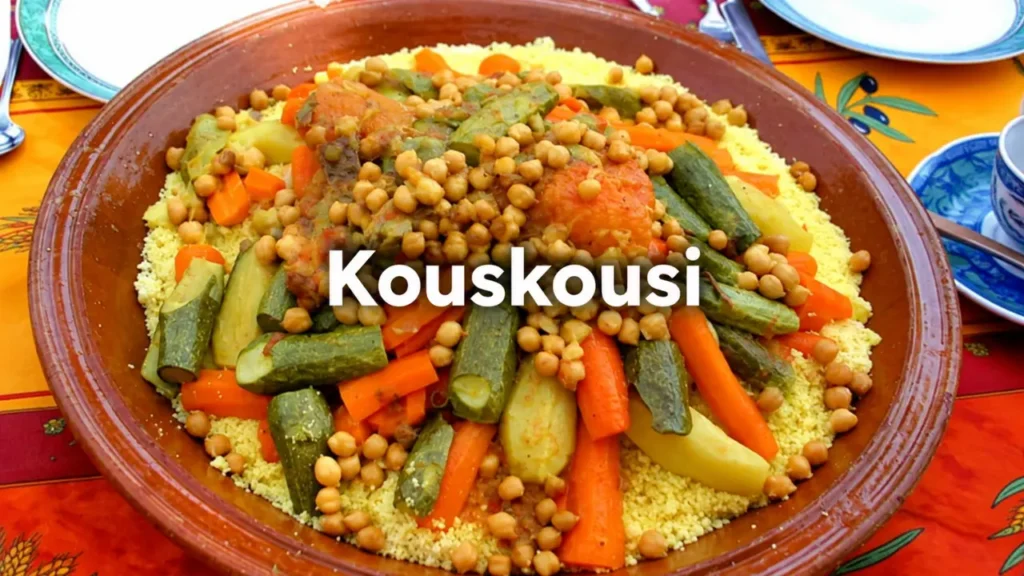

Introduction
Kouskousi is worth understanding on its own terms because calling it simply “couscous” can lead to the wrong cooking method, the wrong texture, and even the wrong recipe. In Greek food traditions, kouskousi or kouskousaki appears among small traditional pasta products, while the similar word couscous is strongly associated with the steamed semolina food of North Africa. The names are close, the ingredients can overlap, and the confusion is understandable. The cooking methods are where the difference becomes useful.
What Kouskousi Looks Like and How It Is Used
Kouskousi is associated with small pasta pieces rather than the long strands or flat shapes people usually picture when they hear the word pasta. Greek culinary sources list kouskousaki alongside other traditional pasta such as hilopites, kritharaki and trachanas.
Its small size is not just a visual feature. It affects how the pasta behaves during cooking.
Tiny pieces cook relatively quickly and can absorb the flavor of broth, sauce or other ingredients around them. That makes kouskousi particularly suitable for soups, stews, side dishes and simple home-style meals.
The Greek government’s agricultural food portal describes traditional Greek pasta as a major part of the country’s food culture, with regional varieties made from straightforward ingredients such as wheat, milk and eggs. Greek tourism material also identifies kouskousaki as one of the country’s traditional pasta types.
That places kouskousi firmly within a wider Greek pasta tradition rather than treating it as an unusual modern ingredient.
Why Kouskousi Gets Confused With Couscous
The confusion starts with the name.
Kouskousi sounds almost identical to couscous, and both foods can be made from wheat semolina. Both can also appear as small pieces that look more like grains than conventional pasta.
But appearance does not tell you how the food should be prepared.
Traditional North African couscous is made by forming tiny semolina granules and traditionally steaming them. Greek kouskousi used as a small pasta is handled differently and can be boiled or cooked directly in liquid.
That distinction is especially important when following a recipe.
If a recipe expects traditional couscous and you use a pasta-style kouskousi, you may end up with a much firmer and denser result. If a Greek recipe expects small pasta and you replace it with instant couscous, the finished dish can become softer and behave differently in the broth.
The safest approach is to look at the recipe, the country or region associated with it, and the cooking instructions on the package.
Kouskousi in Greek Pasta Tradition
Greek cuisine has a long tradition of producing pasta at home and preserving it for later use.
Traditional pasta-making was closely connected with seasonal agricultural life. After cereal harvests, households could use available wheat together with ingredients such as milk and eggs to prepare pasta that could be dried and stored.
The result was not one standard pasta shape. Greek regions developed their own forms, names and preparations.
Kouskousi fits into that tradition because its small shape makes it practical for everyday cooking. It can be cooked in soup, paired with a sauce, served alongside meat or combined with vegetables and legumes.
The Greek tourism authority specifically highlights kouskousaki among traditional Greek pasta products and notes that these pastas can be enjoyed with seafood, meat, legumes, sauces and soups.
That regional context matters. Kouskousi should not be treated as though every product carrying the name belongs to one identical culinary tradition.
The Connection Between Kouskousi and Thrace
Thrace is particularly relevant when discussing Greek kouskousi.
Soufli, in the Evros region of northeastern Greece, is known for traditional food products connected with the area’s Thracian heritage. Local Greek tourism material lists couscous-style kouskousi alongside other traditional products such as trachanas, handmade phyllo and oumats.
This gives kouskousi a more specific geographical connection than a generic description of “Mediterranean pasta” suggests.
Food traditions in border and regional areas often reflect movement between cultures. Thrace itself has a complex culinary history, and similar ingredients and techniques can appear across neighboring food traditions.
That helps explain why the name kouskousi can sound familiar outside Greece while still appearing in a distinctly Greek pasta context.
What Is Kouskousi Made From?
The foundation of Greek kouskousi is generally wheat-based pasta, with semolina playing an important role in many versions.
Durum wheat is widely used in pasta because its characteristics allow pasta to hold its structure during cooking. Depending on the specific traditional or commercial product, other ingredients may also be present.
This is one reason it is better to check the package instead of assuming that every kouskousi product has exactly the same ingredients.
Traditional Greek pasta can include wheat, milk and eggs. Commercial products may use a much shorter ingredient list.
The ingredient label is particularly important for anyone dealing with food allergies or dietary restrictions.
Kouskousi should also not be described as a naturally gluten-free food when it is made from wheat semolina. Wheat-based versions contain gluten.
Kouskousi vs Couscous: What Is the Real Difference?
The easiest way to separate the two is to focus on how they are produced and cooked.
| Feature | Greek kouskousi | Traditional North African couscous |
|---|---|---|
| Culinary role | Small pasta | Semolina-based staple |
| Main wheat ingredient | Wheat or semolina-based pasta | Durum-wheat semolina |
| Appearance | Small pasta pieces or beads | Tiny semolina granules |
| Traditional preparation | Boiled or cooked in liquid | Steamed |
| Texture | Tender, pasta-like bite | Light and fluffy |
| Common dishes | Soups, stews, side dishes and pasta meals | Stews, vegetables, legumes and meat |
| Gluten | Wheat-based versions contain gluten | Traditional wheat couscous contains gluten |
There is still an important qualification.
The word kouskousi is not used consistently across every source or region. In some contexts, it is used as a spelling connected with couscous itself. In Greek culinary contexts, however, it can identify a small pasta.
That means the question “Are kouskousi and couscous the same?” does not have one useful answer without context.
For cooking purposes, the package instructions are more reliable than the spelling.
How Kouskousi Is Cooked
When kouskousi is sold as a small pasta, it can be cooked in boiling water or directly in broth.
The basic method is simple.
Cooking Kouskousi in Water
Bring a pot of salted water to a boil and add the pasta. Let it simmer according to the product’s instructions, then taste a piece before draining.
Because the pieces are small, they can cook faster than larger pasta shapes. Do not assume that leaving them in the pot longer will improve the texture.
The goal is tender pasta that still has enough structure to remain distinct.
Cooking Kouskousi in Soup
Cooking kouskousi directly in soup is particularly practical.
Add the pasta toward the stage specified by the recipe and allow it to absorb some of the broth while cooking. This gives the pasta more flavor than cooking it separately in plain water.
There is one catch: small pasta continues absorbing liquid as it sits.
A soup that looks perfect when served can become much thicker after standing for several minutes. If you are preparing the soup ahead of time, keep that absorption in mind.
Cooking Kouskousi in a Sauce
Kouskousi can also be cooked with a seasoned sauce or broth in a one-pot preparation.
This works well because the small pieces readily take on surrounding flavors. Tomato, vegetables, herbs, meat broth and legumes can all provide a strong base.
The amount of liquid needs attention, though. Too little can leave the pasta undercooked, while too much can turn the dish into something closer to a thick soup.
What Does Kouskousi Taste Like?
Kouskousi has a mild wheat flavor, so the surrounding ingredients usually determine the character of the finished dish.
That makes it useful in recipes where you want the pasta to carry a sauce or broth without competing with it.
Properly cooked kouskousi should have a tender texture while retaining enough firmness to keep the individual pieces noticeable.
Overcooked kouskousi is a different story.
Because the pieces are small, they can lose their structure quickly when left in hot liquid. This is especially noticeable in soup, where the pasta continues absorbing broth even after the heat has been turned off.
For that reason, timing matters more than complicated cooking technique.
The Best Dishes for Kouskousi
Kouskousi makes the most sense in dishes where small pasta can absorb flavor.
Soups
Soup is one of the strongest uses for kouskousi. Its small size allows it to spread throughout the broth rather than dominating each spoonful.
Chicken soup, vegetable soup and meat-based broths can all work with small pasta.
Stews
A hearty stew can use kouskousi as a substitute for larger pasta or another starch. The pieces absorb the surrounding sauce and add substance without requiring a separate side dish.
Vegetable Dishes
Kouskousi can be paired with cooked vegetables, tomato, herbs and olive oil for a simple meal or side dish.
Its mild flavor works particularly well when the vegetables provide most of the seasoning.
Meat-Based Meals
Greek pasta traditions frequently pair small pasta shapes with meat and tomato-based sauces. Kouskousi can work in a similar setting, particularly when the sauce is rich enough to coat the small pieces.
Cold Pasta Preparations
Once cooked and cooled, small pasta can also be used in salads. Fresh herbs, vegetables, olive oil and a sharp dressing can balance the mild wheat flavor.
The pasta should not be overcooked before cooling because a soft texture becomes more noticeable in a cold dish.
Is Kouskousi a Grain or Pasta?
In the Greek culinary context discussed here, kouskousi is better treated as pasta.
The confusion comes from its appearance.
Small round pieces can look like grains such as rice or other cereal products, but a food’s appearance does not determine its classification. Couscous itself is also commonly mistaken for a grain because of its shape, even though it is made from processed semolina.
The important distinction is how the food is produced.
Greek kouskousi belongs with the small pasta products described in Greek culinary sources. That is why it can be prepared alongside other pasta shapes and used in soups, sauces and traditional meals.
Is Kouskousi Gluten-Free?
Traditional wheat-based kouskousi is not gluten-free.
If the product is made from durum wheat or wheat semolina, it contains gluten. The same applies to ordinary North African couscous made from wheat semolina.
Anyone who needs to avoid gluten should read the ingredient and allergen information on the specific package rather than relying on the product’s appearance.
A small round shape does not make a wheat-based food gluten-free.
If a gluten-free substitute is needed, alternatives made from rice, corn or other gluten-free ingredients may work in certain recipes. The cooking time and texture will not necessarily match wheat-based kouskousi, so substitutions should be made with the recipe in mind.
Kouskousi Nutrition Depends on What You Put Around It
Kouskousi is primarily a wheat-based carbohydrate food, so it works best as one part of a meal rather than being treated as a complete meal by itself.
The nutritional profile of the finished dish depends heavily on what accompanies it.
A bowl containing kouskousi, vegetables, beans and a moderate amount of olive oil is very different from a large serving covered in a rich sauce.
The same principle applies to soups. Adding vegetables and a protein source can make the dish more substantial, while the pasta provides carbohydrates and texture.
There is no reason to turn kouskousi into a “health food” claim. It is simply a useful pasta ingredient whose nutritional role depends on the overall meal.
How to Choose Kouskousi at the Store
If you find a package labeled kouskousi, do not rely only on the name.
Check the ingredient list first.
Then check the preparation instructions.
If the package says to boil the product like pasta, use it accordingly. If the instructions call for steaming or rehydration, follow those directions instead.
The regional description can also help. A Greek product marketed as traditional pasta should be approached differently from a North African couscous product.
This simple check prevents the most common mistake: assuming that similar names always indicate identical foods.
How to Store Kouskousi
Dry kouskousi should be stored in a cool, dry place in a sealed container or its original package.
Moisture can affect dried pasta, so keeping the product dry is more important than refrigeration.
Once cooked, leftovers should be placed in the refrigerator in a covered container.
When reheating, a small amount of water, broth or sauce can help restore moisture. This is especially useful because small pasta can become firmer as it cools.
If you have cooked more kouskousi than you need, using it the next day in soup, a vegetable dish or a cold pasta salad is often better than trying to reheat it repeatedly.
Why the Name Should Not Dictate the Recipe
Kouskousi is a good example of why food names need cultural context.
The similarity to couscous is obvious, but that does not mean every product or recipe using the name follows the same preparation method. Greek culinary sources identify kouskousaki as a traditional pasta, while other sources use kouskousi in connection with couscous.
That is not a reason to dismiss the food as confusing or obscure.
It is a reason to pay attention to the product in front of you.
If it is Greek small pasta, cook it like pasta. If you are working with traditional North African couscous, use the preparation method associated with couscous. If the package gives specific instructions, follow them before relying on assumptions based on the name.
That small distinction can change the entire dish.
Frequently Asked Questions
1. Can I replace kouskousi with regular couscous in a recipe?
You can in some dishes, but the result will not be identical. Pasta-style kouskousi and couscous can differ in texture and cooking method. A soup or stew may tolerate the substitution, while a recipe designed around a particular texture may not.
2. Why does kouskousi sometimes look like a grain?
Its small, rounded shape makes it resemble rice or other grains, but Greek kouskousi is used as a pasta product. The appearance is one reason it is easy to confuse with couscous.
3. Can I cook kouskousi directly in chicken broth?
Yes, when you are using a pasta-style product intended to be boiled or simmered. Cooking it in broth can give the pasta more flavor, but keep an eye on the liquid because the small pieces absorb it quickly.
4. Does kouskousi always contain eggs or milk?
No. Ingredients can differ between traditional and commercial products. Some Greek traditional pasta products are made with wheat, milk and eggs, while a particular packaged kouskousi may have a simpler ingredient list. The label on the product you buy is the reliable source.
5. Is Greek kouskousi the same as pearl couscous?
Not automatically. The products can look similar because both are small and rounded, but names such as pearl couscous are used for particular commercial pasta products. If a recipe specifically calls for Greek kouskousi, use the product intended by that recipe rather than assuming that every round pasta is interchangeable.