
Introduction
A pomerusky can look like the perfect combination of a fluffy Pomeranian and a miniature Husky, but appearance is the least important part of choosing one. The real question is whether you are prepared for a dog that may be energetic, vocal, intelligent, independent, and demanding about grooming. The Pomeranian and Siberian Husky come from very different backgrounds, so their cross can inherit a surprisingly wide range of physical and behavioral traits.
That unpredictability is not necessarily a flaw. It simply means a future owner should judge the individual dog rather than expect every pomerusky to look or behave exactly the same way. Size, coat, temperament, exercise needs, and even the amount of shedding can vary from one dog to another.
Where the Pomerusky Comes From
The pomerusky is a cross between a Pomeranian and a Siberian Husky. It is commonly known online as a Pomsky, and it remains a relatively new designer cross rather than a standardized purebred dog. Current breed references emphasize that there is no single fixed appearance or temperament that every individual will inherit.
The unusual pairing comes from the dramatic difference between the two parent breeds. The Pomeranian is a small companion dog, while the Siberian Husky was developed as a working sled dog with considerable endurance. That combination can produce a dog with a compact build and a much bigger need for activity than its appearance might suggest.
The first intentional litters appeared only relatively recently. Because the cross is still young compared with established breeds, information about long-term breed-specific health patterns is more limited than it is for dogs with much longer documented histories.
This is one reason responsible breeding matters so much. A buyer should be interested in the health and temperament of the parent dogs rather than choosing a puppy simply because it has an especially striking face or unusual eyes.
What a Pomerusky Can Look Like
There is no single appearance that defines a pomerusky.
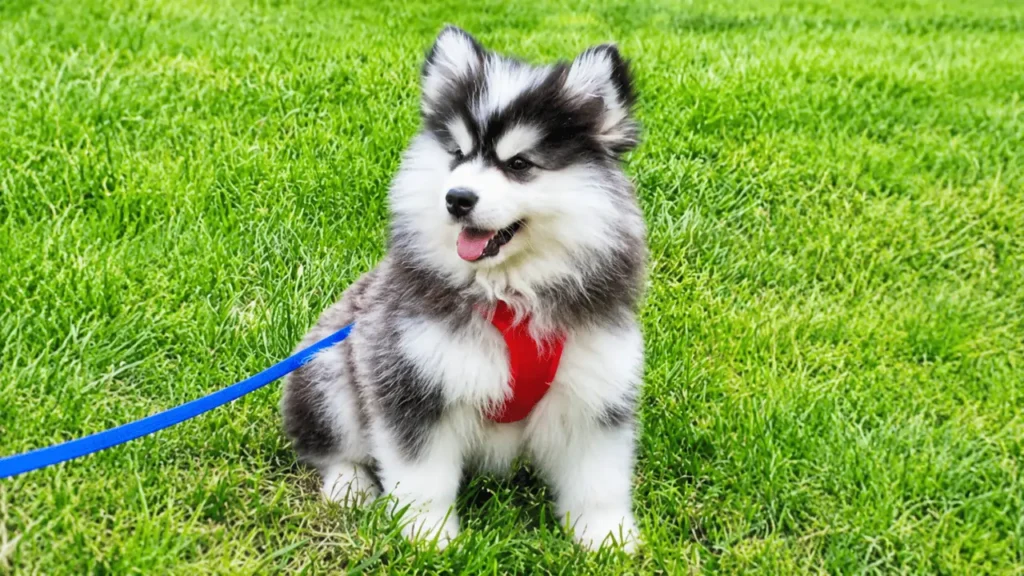
Some have a distinctly Husky-like face with a mask, pointed ears, and a thick coat. Others look considerably more like their Pomeranian parent. The body can also range from quite compact to noticeably larger, depending on the dog’s inherited traits and breeding background.
Coat colors can include combinations of white, gray, black, red, brown, cream, and other shades. Blue eyes are possible, but they are not guaranteed. Brown eyes, mixed eye colors, and other variations can occur.
The coat itself may be medium or long and can have a dense double-coated texture. That attractive fluff is also one of the biggest practical commitments of ownership.
A puppy photograph tells you very little about the final adult dog. If adult size is important to you, ask about the parents, previous litters, and the dog’s generation rather than assuming that a tiny puppy will remain tiny.
Pomerusky Size Is Less Predictable Than Buyers Often Expect
Published Pomsky estimates commonly place adult dogs around 10 to 15 inches tall and roughly 20 to 30 pounds, while other current references give broader ranges because the cross can inherit substantially different proportions from its parents.
Those numbers should be treated as planning estimates rather than promises.
A pomerusky is not a standardized breed with a tightly controlled size range. Generation, parent size, genetics, and individual development can all affect the final result.
This matters when preparing a home. Someone choosing the dog because they expect a guaranteed tiny companion could be disappointed if the adult becomes considerably more substantial.
The safest approach is to plan for variation. Look at the adult parents whenever possible and ask the breeder for realistic expectations instead of relying on labels such as “mini” or “tiny.”
The Temperament Can Be Fun, but It Is Not Effortless
The pomerusky can be affectionate, playful, alert, intelligent, and highly interactive. Those qualities make the cross appealing to owners who want a dog that participates in everyday family life rather than simply sitting quietly nearby.
But intelligence can work both ways.
A clever dog quickly learns routines, including routines that the owner did not intend to teach. If barking gets attention, barking can become a habit. If jumping gets rewarded with excitement, jumping can become part of the greeting ritual.
Both parent breeds can also contribute an independent streak. That means a pomerusky may understand what you are asking and still decide that something else is more interesting.
This is why consistency matters more than trying to overpower the dog. Reward-based training, clear rules, and short sessions are much more useful than harsh corrections.
The dog’s individual personality still matters. Some will be outgoing and eager to interact, while others may be more cautious around unfamiliar people.
Expect a Dog That May Be More Vocal Than Its Size Suggests
A small body does not necessarily mean a quiet household.
Siberian Huskies are well known for vocal communication, while Pomeranians can also be alert and expressive. A pomerusky may inherit either tendency or a combination of both.
This can be entertaining for owners who enjoy an expressive dog. It can be considerably less entertaining for neighbors.
Apartment residents should think about this before bringing one home. Training can help manage unnecessary barking and other vocal habits, but it cannot guarantee that a naturally expressive dog will become silent.
The better strategy is to teach the dog when attention is appropriate, reward calm behavior, and avoid accidentally reinforcing barking by immediately giving the dog whatever it wants.
Exercise Needs Should Not Be Judged by Appearance
This is where prospective owners most often underestimate the pomerusky.
A dog may look small enough to carry around while still inheriting substantial energy from its Husky side. Current breed references describe Pomskies as active dogs that need regular physical activity and mental stimulation.
Daily walks are important, but they should not be the entire exercise plan.
Interactive games, obedience practice, supervised play, scent-based activities, and safe opportunities to explore can help keep an active dog mentally occupied.
Puppies need age-appropriate activity rather than forced endurance exercise. Adult dogs can usually handle more, but the correct amount depends on health, age, size, and individual energy.
An under-stimulated pomerusky may find its own entertainment. Chewing furniture, barking, digging, escaping, and demanding attention are not mysterious behavioral problems when a high-energy dog has too little to do.
Exercise is therefore not just about keeping the dog physically fit. It is part of managing everyday behavior.
Training a Pomerusky Starts Early
A pomerusky should begin learning household rules as soon as it comes home.
Start with basic behaviors such as responding to its name, coming when called, walking appropriately on a leash, sitting, waiting, and leaving unwanted objects alone.
Training sessions should remain short enough to hold the dog’s attention. Repeating the same command endlessly can turn training into a battle of patience.
Positive reinforcement is particularly useful because the dog learns that cooperating leads to something worthwhile.
Socialization deserves equal attention. Controlled exposure to different people, environments, sounds, surfaces, and appropriately vaccinated dogs can help a young dog develop confidence.
Do not wait until the dog is older to address behaviors such as jumping, excessive barking, or poor leash manners. Habits become harder to change once they have been practiced for months.
Grooming May Be the Biggest Routine Commitment
The fluffy coat is one of the pomerusky’s most attractive features, but it is also one of its most demanding.
Both parent breeds can have substantial coats, and Pomskies may shed heavily. Some grooming references recommend frequent brushing, with daily attention often becoming necessary during heavier seasonal shedding.
Regular brushing does more than keep loose hair off the furniture. It can reduce matting, remove dead hair, and give owners an opportunity to notice skin irritation, parasites, or unusual lumps.
The exact grooming schedule depends on the individual coat. A dog with a dense, long coat will require more work than one with a shorter or less abundant coat.
Bathing should be based on the dog’s cleanliness and veterinary or grooming needs rather than following an unnecessarily frequent schedule. Nails also need regular trimming, while dental care should be part of the normal routine.
If you dislike dog hair, this is one aspect of pomerusky ownership you should take seriously before making a decision.
Feeding a Pomerusky Requires Individual Attention
There is no universal feeding quantity that suits every pomerusky.
A puppy has different nutritional needs from an adult. Activity level, body size, age, health, and the calorie density of the chosen food all affect appropriate portions.
Rather than copying a feeding amount from another owner’s dog, follow the food manufacturer’s guidance and ask a veterinarian to assess growth and body condition.
Treats should also be included in the overall daily intake.
A healthy feeding routine should be boring in the best possible way: consistent meals, appropriate portions, clean water, and adjustments when the dog’s needs change.
Sudden diet changes are best avoided unless there is a clear reason to make them.
Health Concerns Deserve Serious Attention
The pomerusky does not have a long-established set of breed-specific health statistics because the cross is relatively new. That makes responsible veterinary care and careful breeding particularly important.
Potential concerns can come from either parent line. Veterinary breed references identify issues that may include hip dysplasia, eye problems, luxating patella, dental problems, allergies or skin conditions, and collapsing trachea.
These are potential risks, not predictions that every pomerusky will develop them.
The breeder’s health-testing practices matter. Before purchasing a puppy, ask what screening has been performed on both parents and request documentation rather than accepting verbal assurances.
Once the puppy is home, routine veterinary examinations, vaccinations, parasite prevention, dental care, and monitoring for changes in behavior or physical condition are essential.
Current breed sources commonly estimate a lifespan around 12 to 15 years, but an individual dog’s lifespan can differ based on genetics, healthcare, nutrition, environment, and other factors.
Is a Pomerusky Good With Children?
A well-socialized pomerusky can be a good family companion, but the dog’s individual temperament matters more than its label.
Children should learn how to interact respectfully with dogs. Pulling fur, disturbing a dog while eating, climbing on it, or chasing it when it wants space should never be treated as harmless play.
Adults should supervise interactions with younger children.
The dog’s size can also be misleading. Even if an individual pomerusky is relatively small, it can be energetic and excitable. A household with children needs rules for both sides: children need to respect the dog, and the dog needs to learn appropriate behavior around children.
A calm introduction and ongoing socialization are far more valuable than assuming a particular breed mix will automatically fit every family.
Can a Pomerusky Live in an Apartment?
Yes, but apartment living requires more planning than simply providing enough floor space.
A pomerusky can live indoors successfully when its exercise, mental stimulation, training, and social needs are being met. A large house does not automatically solve those needs, either.
The bigger concern in an apartment may be vocal behavior.
If the dog barks or howls frequently, neighbors can quickly become part of the problem. Owners should work on calm behavior from an early age and make sure the dog receives enough appropriate activity.
Daily outdoor walks should remain part of the routine even when the dog has access to a comfortable home.
Choosing a Puppy Requires More Than Falling for a Pretty Face
A pomerusky puppy with blue eyes and dramatic Husky markings may attract attention immediately, but appearance should not be the deciding factor.
Ask about the parents first.
A responsible breeder should be willing to discuss health testing, veterinary records, temperament, the puppy’s early socialization, and the expected characteristics of the litter.
Pay attention to the environment where the puppies are raised. Clean surroundings, appropriate interaction, and healthy-looking parent dogs are all more meaningful than a flashy advertisement.
Be particularly cautious about sellers who make extreme promises about adult size, guaranteed temperament, or unusual appearance.
There is no honest way to guarantee that every puppy will develop into a miniature Husky with a specific personality.
The best puppy for a household is the one whose health, temperament, and expected needs fit that household—not necessarily the one that gets the most attention in a photograph.
Pomerusky vs. Pomeranian vs. Siberian Husky
The Pomeranian, Siberian Husky, and pomerusky should not be treated as interchangeable options.
The Pomeranian is a small companion breed. The Siberian Husky is a working breed built for endurance. The pomerusky can inherit characteristics from either side, creating a dog that may be physically smaller than a Husky while retaining a surprisingly active personality.
That makes the cross appealing, but it also removes some predictability.
Someone who wants a reliably tiny dog should think carefully before choosing a cross whose adult size can vary. Someone who wants a predictable working-dog temperament should also avoid assuming that a pomerusky will simply behave like a smaller Husky.
The cross makes the most sense for people who appreciate the combination itself and are prepared for individual variation.
The Biggest Advantages and Drawbacks of Ownership
The appeal of a pomerusky is easy to understand. These dogs can be affectionate, playful, intelligent, expressive, and visually distinctive. For an owner who enjoys an active relationship with a dog, those qualities can be genuinely rewarding.
The drawbacks are just as real.
Shedding can be heavy. Grooming takes time. Training requires consistency. Vocal behavior can become frustrating. Exercise needs may be greater than expected. Adult appearance and temperament are not completely predictable.
None of those points make the pomerusky a bad choice.
They simply make it a poor choice for someone looking for a low-maintenance pet.
If you have the time to train, exercise, groom, socialize, and care for the dog properly, the demanding parts become manageable responsibilities rather than surprises.
Final Verdict
The pomerusky is a dog for owners who want personality, not convenience.
Its fluffy appearance and Husky-like features may be what attract people initially, but its real character comes from the combination of intelligence, energy, independence, affection, and the possibility of strong grooming and vocal demands.
The smartest approach is to stop choosing based on the photograph and start choosing based on the life you can provide.
If your routine allows daily activity, consistent training, regular grooming, proper veterinary care, and plenty of interaction, a pomerusky can be an engaging companion. If you want a quiet, predictable, low-maintenance dog, its appearance should not persuade you otherwise.
The cute face is the introduction. The commitment is the real story.
FAQs
1. Does a pomerusky need professional grooming?
Not necessarily for every grooming session, but professional help can be useful for bathing, coat maintenance, nail care, and heavier seasonal shedding. Owners should still learn regular brushing because professional grooming does not replace home maintenance.
2. Why can two pomerusky puppies from the same litter look different?
Each puppy receives a different combination of genes from its parents. Because the Pomeranian and Siberian Husky differ considerably in size, coat, and physical structure, siblings can develop noticeably different appearances and temperaments.
3. Should a pomerusky be allowed off leash?
Only in a secure area unless you have a genuinely reliable recall and the location is appropriate. Husky ancestry can contribute to independence and prey-drive tendencies, so assuming that a dog will automatically return when called is risky.
4. What is the most important thing to check before buying a pomerusky puppy?
Start with the health and temperament of the parents and ask for documented health testing. A puppy’s appearance is important, but it tells you far less about its long-term suitability than responsible breeding and a healthy family line.
5. Is owning a pomerusky easier because it is smaller than a Siberian Husky?
Not necessarily. A smaller body does not remove the possibility of high energy, vocal behavior, strong curiosity, or demanding grooming. Owners should evaluate the dog’s actual needs rather than assuming its size determines how much work it will require.