
Introduction
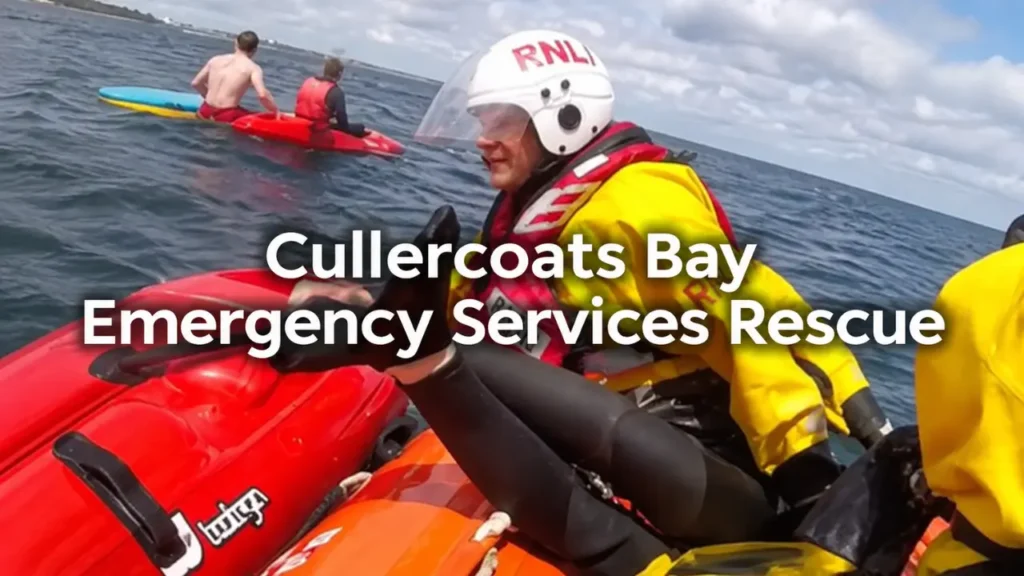
The most important thing about a cullercoats bay emergency services rescue is not the dramatic moment a lifeboat reaches someone in trouble. It is everything that happens before that point. A person notices something is wrong, the alarm is raised, the Coastguard coordinates the response, and trained crews move quickly. At Cullercoats, that chain of action has repeatedly made the difference between a difficult incident and a much worse outcome.
Cullercoats Bay is a popular coastal spot with a sandy beach, two piers, surrounding cliffs and a working RNLI lifeboat station. Its relatively sheltered appearance can make the water seem less threatening than it really is. The reality is that wind, waves, tides and changing conditions can create serious problems for swimmers and people using small craft.
Recent incidents in 2026 have brought that reality into sharp focus. A child was rescued after a member of the public quickly called 999. Days later, another emergency near the bay resulted in the death of a man despite the deployment of several emergency services. In August, RNLI crews also responded when two people were washed from a kayak north of the bay.
These incidents show why Cullercoats’ rescue network deserves attention. The lifeboat is only one part of it.
Cullercoats has a long history of lifesaving
Cullercoats Lifeboat Station was established in 1848 and is located within the horseshoe-shaped Cullercoats Bay. The station operates a B-class inshore lifeboat and has received seven awards for gallantry.
That history is more than a point of local pride. It explains why the area has such an established rescue presence.
The Cullercoats lifeboat is designed for inshore operations, making it particularly useful when an incident occurs close to beaches, piers or the shoreline. The crews are volunteers who train to respond to emergencies that can change quickly once they reach the water.
The modern cullercoats bay emergency services rescue system also involves organisations beyond the RNLI. HM Coastguard can coordinate the initial response, while ambulance services, police, volunteer lifesaving organisations and specialist medical teams may become involved depending on the circumstances.
This matters because a coastal emergency rarely follows a neat script.
One incident might require only a lifeboat. Another could require several emergency vehicles, specialist personnel and air ambulance support. The response has to match the situation rather than follow a fixed formula.
The July child rescue shows why a quick phone call matters
On 4 July 2026, Cullercoats RNLI was tasked after a member of the public noticed a child in the water and called the emergency services.
The timing was particularly fortunate. The lifeboat crew had been cleaning up after the station’s annual Harbour Day fundraising event when the pager sounded. The crew launched rapidly and reached the area within minutes. The child was located approximately 50 metres from the beach, taken aboard the lifeboat and brought back to the station before being placed in the care of ambulance personnel and reunited with their parents.
The incident is a powerful example of how the public fits into the rescue system.
The person who spotted the child did not attempt to enter the water. Instead, she called 999 and asked for the Coastguard. That gave trained rescuers the opportunity to respond while the situation was still manageable.
For a cullercoats bay emergency services rescue, that first decision can be critical.
People sometimes hesitate because they are unsure whether what they are seeing is genuinely dangerous. At a beach, however, waiting for absolute certainty can waste valuable time. If someone appears to be struggling in the water, raising the alarm is the safer choice.
Why 999 and the Coastguard are the right route
Cullercoats RNLI specifically advises people not to contact the lifeboat station directly to report an emergency. Anyone reporting an incident around the coastline or at sea should call 999 or 112 and ask for the Coastguard.
That advice is practical rather than bureaucratic.
The Coastguard can coordinate search and rescue resources and determine which services need to be involved. Calling the station directly could delay the deployment of the appropriate assets.
The distinction becomes even more important when an incident is developing quickly.
A report of a swimmer in difficulty could become a lifeboat call. A medical emergency on the beach could require an ambulance. A serious incident involving several people could require multiple agencies. The person making the emergency call does not need to decide which resource is needed.
They need to provide accurate information and let the emergency service coordinate the response.
That approach has repeatedly featured in the local rescue network and remains one of the clearest lessons from recent incidents.
The July 19 incident had a very different outcome
On the evening of 19 July 2026, emergency services were called after two men got into difficulty in the sea near Cullercoats Bay.
Both men were recovered from the water. One man, in his 20s, was pronounced dead at the scene. The second man, also in his 20s, was taken to hospital in a serious but stable condition. Northumbria Police confirmed the incident and said both families were being supported.
The circumstances were difficult. A witness described increasingly choppy conditions, strong wind and waves around the area that evening.
This incident deserves careful treatment because it demonstrates something that rescue stories sometimes overlook: even a rapid and substantial emergency response cannot guarantee survival.
The purpose of a cullercoats bay emergency services rescue is to give people in danger the best possible chance. It does not mean every situation can be reversed.
That distinction is important when discussing coastal safety. Rescue teams are not a safety net that makes risky behaviour harmless. They are there because emergencies happen despite precautions, and because people sometimes make decisions that place them in danger.
Ambulance and specialist teams can become part of the response
A serious sea incident can quickly move beyond the lifeboat itself.
In the July 19 case, emergency medical resources were deployed alongside the other responding services. That reflects the reality of serious water incidents: once casualties are brought out of the water, medical care may be just as important as the rescue itself.
The North East Ambulance Service has also warned about the dangers associated with open water, including cold-water shock and drowning. Its 2026 summer safety campaign highlighted the fact that water can look safe while remaining much colder and more dangerous than people expect.
This is why a successful cullercoats bay emergency services rescue should not be viewed as ending when someone reaches the lifeboat.
Recovery from the water may be only the beginning of the medical response.
A casualty may need assessment, treatment or transport to hospital. In more serious situations, specialist ambulance teams can be required. The emergency response therefore continues from the water to the shoreline and, where necessary, into hospital care.
The August kayak rescue showed the value of local awareness
Another useful example came in August 2026.
The Tynemouth Volunteer Life Brigade reported that two people were using a kayak north of Cullercoats Bay when they were washed from the craft by a wave. Cullercoats RNLI personnel had already noticed the kayak heading out and became concerned about the route and approaching darkness. When the pair were washed into the sea, the lifeboat launched following a 999 call.
The lifeboat crew reached them quickly and recovered both people.
They were wearing flotation devices, which helped keep them afloat until the rescue. Once ashore, they were checked by members of the Tynemouth Volunteer Life Brigade before being handed into the care of the North East Ambulance Service for further assessment.
There is a valuable lesson here that has little to do with dramatic rescue footage.
The rescue began partly because trained people were paying attention.
The RNLI crew had noticed the kayak’s direction and the approaching darkness. That awareness allowed them to recognise a developing problem rather than waiting for the situation to become obvious from a distance.
A strong cullercoats bay emergency services rescue often depends on exactly that kind of observation.
The Tynemouth Volunteer Life Brigade remains an important local resource
The Tynemouth Volunteer Life Brigade adds another layer to the area’s coastal emergency response.
The organisation dates back to the 19th century and remains one of only three active Volunteer Life Brigades in the United Kingdom. Its history began after the loss of 32 people from the wrecked vessels SS Stanley and Friendship at Tynemouth in November 1864.
Today, its members can be tasked by HM Coastguard to support coastal incidents.
The August kayak rescue is one recent example. The brigade’s members helped once the casualties were brought ashore, providing further assistance before the ambulance service took over.
That kind of cooperation matters because coastal rescue does not stop at the waterline.
A person may be successfully recovered but still require medical attention. A beach or harbour may need to be managed while emergency teams work. Volunteers with local knowledge can provide useful support during those moments.
The result is a layered response in which different organisations handle different parts of the emergency.
Cullercoats can look sheltered without being risk-free
Cullercoats Beach is enclosed by cliffs and two piers and is described by the RNLI as a sheltered bathing environment. It is also a popular family beach and has boat-launching facilities.
That sheltered character should not be mistaken for guaranteed safety.
The sea does not remain constant simply because a beach looks calm from the promenade. Wind direction, tide, waves and water temperature can all affect someone in the water.
The 2025 rescue of a large kayaking and paddleboarding group near Cullercoats provided a clear example. Emergency services were alerted after 32 children and adults experienced difficulty in the water when wind conditions pushed them away from shore. Cullercoats RNLI, Tynemouth RNLI and RNLI lifeguards worked together. Thirteen children and five adults were rescued by lifeboat crews, while the remainder returned safely to shore before the lifeboats launched.
That incident reinforces an uncomfortable fact: conditions can change faster than people expect.
A group can enter the water feeling comfortable and then find that wind makes the return journey significantly harder.
Lifeguards provide another important line of protection
Cullercoats Beach has scheduled RNLI lifeguard patrols during the summer season. For 2026, the published patrol period runs from 23 May to 6 September, with patrols scheduled from 10am to 6pm.
The presence of lifeguards changes the safety picture because trained personnel can monitor swimmers and react to developing problems.
The RNLI advises beach users to swim between the red and yellow flags when lifeguards are on duty. It also advises people never to swim alone and to call 999 or 112 and ask for the Coastguard if somebody is in difficulty and no lifeguard is available.
These measures are straightforward, but they matter.
The best rescue is still the one that never needs to happen.
That does not mean every emergency can be prevented. It means people should not treat the availability of Cullercoats RNLI as permission to ignore conditions.
What recent rescues reveal about coastal behaviour
The incidents around Cullercoats show a consistent pattern.
Problems do not always begin with obviously extreme weather. A swimmer can get into difficulty. A child can enter deeper water than expected. A kayak can capsize. Wind can push a paddleboarder away from shore. Darkness can make a routine trip more complicated.
The danger often comes from a change in circumstances.
That is why the strongest safety message from the cullercoats bay emergency services rescue stories is not simply “be careful.” It is to recognise when conditions are moving beyond your ability to control them.
For anyone using the water, checking the forecast, understanding tides, using suitable safety equipment and telling someone where they are going can all reduce the chance of an emergency. RNLI advice for paddleboarders and other water users also stresses the importance of checking weather conditions, avoiding offshore winds and being aware of tidal currents.
The public has a role, but it is not to become the rescuer
The July child rescue makes this distinction particularly clear.
The member of the public who saw the child did the most useful thing possible: she raised the alarm quickly.
She did not need a lifeboat qualification. She did not need specialist rescue equipment. She needed to recognise that something was wrong and make the correct call.
The RNLI’s beach guidance is equally clear that members of the public should not attempt their own rescue when somebody is in difficulty. Instead, they should alert a lifeguard or call 999 or 112 and ask for the Coastguard.
That advice should be taken seriously.
Entering the sea can expose an untrained person to exactly the conditions that caused the original emergency. A well-intentioned attempt to help can create another casualty.
For the public, the most valuable contribution is often information: where the person is, what they are doing, whether they are moving and what can be seen from shore.
The professionals can take it from there.
Why the rescue service deserves community support
Cullercoats RNLI’s history, recent launches and continued volunteer commitment make one thing clear: this is a service built into the local community.
The lifeboat station depends on volunteers who train and respond when emergencies occur. Its operations are supported by the wider community through fundraising and public awareness.
That relationship matters because rescue capability does not appear magically when somebody calls 999.
Crews need training. Boats need maintenance. Equipment needs to be ready. Volunteers need to remain prepared to respond.
The July 2026 child rescue happened partly because the Cullercoats crew was already at the station following its Harbour Day event. They were able to launch rapidly when the call came in.
That detail says a lot about how local rescue works. Preparedness is built long before the emergency itself.
The clearest lesson from Cullercoats Bay
The recent record around Cullercoats does not support complacency.
One child was rescued safely after a member of the public acted quickly. Two people were recovered after a kayak incident in August. A large group required coordinated assistance in 2025. And on 19 July 2026, a major response could not prevent a fatal outcome.
Those stories belong together because they show the full reality of coastal rescue.
A cullercoats bay emergency services rescue is not a guarantee that every situation ends well. It is the result of trained people responding quickly when something has already gone wrong.
That makes the most important part of coastal safety surprisingly simple: recognise danger early, call for professional help and do not create another casualty by trying to handle a rescue yourself.
Cullercoats Bay remains a place for swimming, walking, boating and enjoying the coast. But the sea does not care how familiar the beach looks. Conditions can change, and they can change quickly.
Respecting that fact is not fear of the water. It is common sense.
FAQs
1. What number should someone call during an emergency at Cullercoats Bay?
For an emergency at sea or around the coastline, call 999 or 112 and ask for the Coastguard. The RNLI recommends this route because it allows the appropriate search and rescue resources to be coordinated.
2. Was a child rescued near Cullercoats in July 2026?
Yes. On 4 July 2026, a member of the public spotted a child in the water and called 999. Cullercoats RNLI was tasked by HM Coastguard, located the child about 50 metres from the beach and brought them safely ashore.
3. What happened during the Cullercoats Bay incident on 19 July 2026?
Two men in their 20s were recovered from the sea after getting into difficulty. One died at the scene, while the other was taken to hospital in a serious but stable condition. Northumbria Police confirmed that the incident had been referred to the coroner.
4. Can members of the public try to rescue someone themselves?
The RNLI advises against attempting a rescue yourself. If a person is in difficulty and no lifeguard is available, call 999 or 112 and ask for the Coastguard. Entering the water without appropriate training can put the rescuer in danger as well.
5. Does Cullercoats RNLI respond only to incidents directly inside the bay?
No. Cullercoats RNLI can be tasked to incidents in the surrounding coastal area. The station’s recent launch records include responses at different locations, while incidents such as the July child rescue and August kayak rescue demonstrate that its crews can be deployed beyond the immediate beach area when required.